



From Danger Mouse to the Octonauts, many of the animals we see on television are anthropomorphised characters, cartoons and puppets. Real animals tend to be confined to wildlife shows, for good – and obvious – reasons. But occasionally they wander away from their enclosures.
Before the laws on health and safety were tightened up, and people in general began to consider the wellbeing of animals a little more, there was more real-life animal activity on TV. One of my abiding childhood memories of TV is of the “cute” items on regional news, in which a creature renowned for performing a remarkable feat – a duck that did somersaults, or a fish that gurgled Rule, Britannia! or whatever – would be wheeled in to a studio and cajoled into displaying its talent live on air. Whatever the beast, whatever its trick, it never, ever actually did it. “Perhaps he’s camera-shy,” the presenter – usually Hugh Scully – would say, grimacing as the thing just sat there.
One always got the impression that the programme makers were looking for a little sensation. This was the analogue equivalent of a clip going viral. But a bit of chaos in the studio could not be forced.
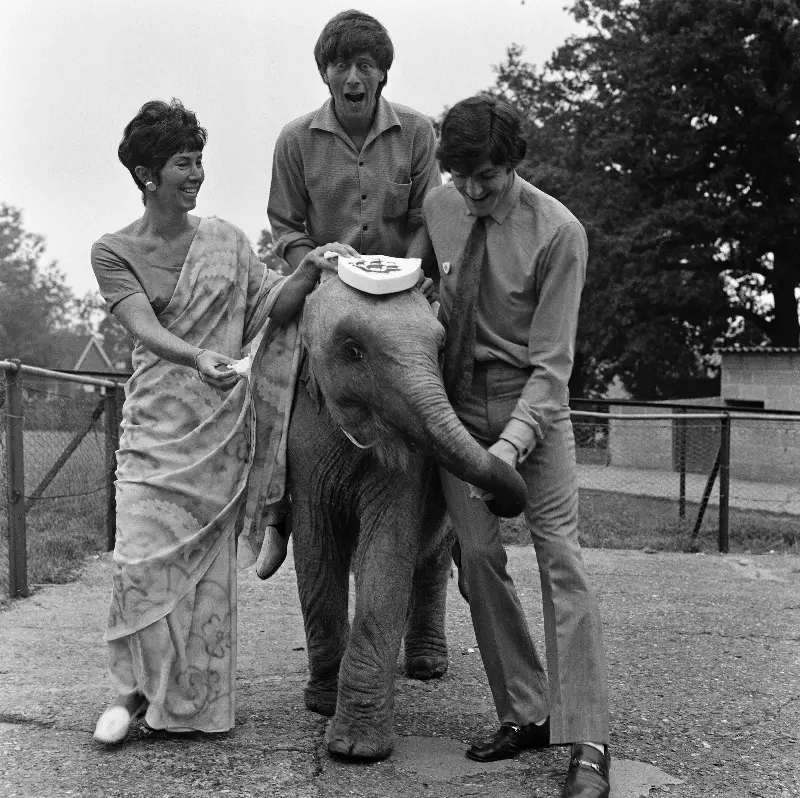
The acme of this form – the legendary appearance of Lulu the baby elephant on Blue Peter in 1969 – works so well because it is spontaneous. Lulu is marvellously uncooperative, resisting being brought in and trying to pull away – until the moment it is time for her to go, when she abruptly switches gears and returns with a vengeance. The sight of her keeper skidding in what she has left behind on the studio floor is one of those moments of TV gold that seems almost too perfect to be real. It is the pinnacle to which no other animal incident can hope to compare.
Bringing an animal on to a news or magazine show is one thing. Bringing one on to a drama is asking for trouble. TV dramas that are about animals – All Creatures Great and Small, Wild at Heart – factor in animals from the start as one of their basic considerations. Occasional animal appearances are where problems begin. Keeping to your shooting schedule is the number-one priority in drama (there are people in TV whose only job is to tell directors to hurry up), so animals often feel a lot less charming or cute when time and money are ticking away.
There were some extraordinary incidents before the lessons were learnt. “The White Elephant” is a 1964 episode of The Avengers set partly in a zoo. So, inevitably, there are scenes in John Steed’s Mayfair flat overlaid with the sound of exotic bird calls and chattering monkeys. There was even a live leopard (though no actual elephant). Contemporary publicity material states: “The leopard gave everyone in the studio some anxiety; it could easily have slipped out between the bars of its cage if the gunfire at the story’s thrilling climax had excited it too much.” What were they thinking?
Similar colour was added at almost the same time to a Doctor Who episode set in far Cathay at the time of Kublai Khan. In it, a street vagabond carries a tiny monkey on his shoulder, which proceeded to do its business throughout rehearsal. Sadly, we don’t know whether its natural functions made it on screen, as, like much Sixties TV, these episodes were wiped.
At the other end of the too much/not enough TV animal scale are the dogs seen in an episode of the BBC’s post-apocalyptic drama Survivors in the mid-1970s. The script calls for our heroes to be surrounded by a pack of starving rabid hounds. Unfortunately, a more happy, yappy, waggy-tailed bunch of canines you never did see. The actors manfully emote tension and terror, trapped inside their cars with windows wound tightly shut. “Don’t go near them!” screech the adults to the children. At which point the camera cuts to a golden retriever sunning its tummy like the very best boy in the world.
Soaps are the last TV shows made in this old-fashioned way, and pets will always be part of their fabric. The advantage of a long-running production is that the beast in question can get accustomed to the studio and the actors and even start to enjoy its turns before the cameras. Even so, I remember in my days working as a story associate on Coronation Street, the producer keenly going through scripts and blue-pencilling out as many of the pets as he could.
The hectic pace of modern soap production has reduced the number of pets: EastEnders has only Mini Mo the cat, Corrie only David The Dog. The days of Schmeichel, Roly, Wellard and Ethel’s little Willy are gone.
Probably the most celebrated soap pet of all was Bouncer, the Mangels’ Labrador in Neighbours, if only for the incredible sequence in a 1990 episode in which viewers were treated to his dream – a romantic fantasy of “married” life with Rosie the border collie. To a swelling soundtrack, we see Bouncer propose to Rosie and then set up with her in a kennel under the sign “home sweet home”, with a couple of puppies frolicking in their yard.
Like Lulu on Blue Peter, this was one of those TV moments you can’t quite believe you’re seeing. But then, animals often make human beings behave strangely. I suspect that’s part of what they are for.