



It’s a truism that every man thinks he is an excellent driver. But it’s a truism that does not apply to me: I’m pretty sure I’m an average driver.
Yet there is one motoring arena where I do excel: I’m very good at deciding to drive to ridiculous places, in hair-raising ways. Here are some examples.
One mad autumn I drove a gasping, wheezing hire car up Chile’s Puna de Atacama to 16,000ft, higher than anything in the Alps. I developed altitude sickness at the wheel.
Another time I took a Yerevan airport rental: deep into the Armenian Caucasus, where they have leopards and bears, but the scariest part was Yerevan at rush hour.
Then there’s the time I crossed the Andes in a rented Suzuki Swift, to visit the ancient Kogi people of Colombia, which taught me one profound lesson: never try to cross the Andes in a rented Suzuki Swift.
Best of all was Laos, south-east Asia. Researching a thriller near Phonsavan, in one of only three rentable 4WDs in the country, I chose a route home to Vientiane which the guidebook admitted nobody had tried.
By midnight I was churning through cold jungle mud, swigging whiskey for courage. Then, out of the dark, came cries: an entire Hmong family, their van sunk to its axles, and in their arms a horribly sick baby who would, it seemed, die without a doctor.
So we chained their van to my pick-up and I hauled them through the swamp for hours, the gears grinding, the baby whimpering, the chain snapping every 20 minutes, forcing Hector, the young father, to leap out and mend it, again and again.
Yet we made it. The baby lived. At the end, in the dawn light of a Laotian town, Hector looked at me and said the only English he knew: “I love you.”
And here’s the thing. Every one of these adventures was better because I was driving a manual. That sounds silly, but it’s true. Here’s why. Manual driving is tactile, bodily, even sensual.
Your hand rests with subtle tension on the knob; your ear reads the engine’s rising growl. Your wrist, arm and foot move as one, as the throbbing machine surges in response. Yes, it verges on the erotic.
Not only is driving a manual more intense, it is also, in some ways, mechanically superior: lighter, simpler, cheaper to fix. Indeed, I’m not sure my Laos adventure could have been done in an automatic. On top of that, manual driving is way more cinematic.
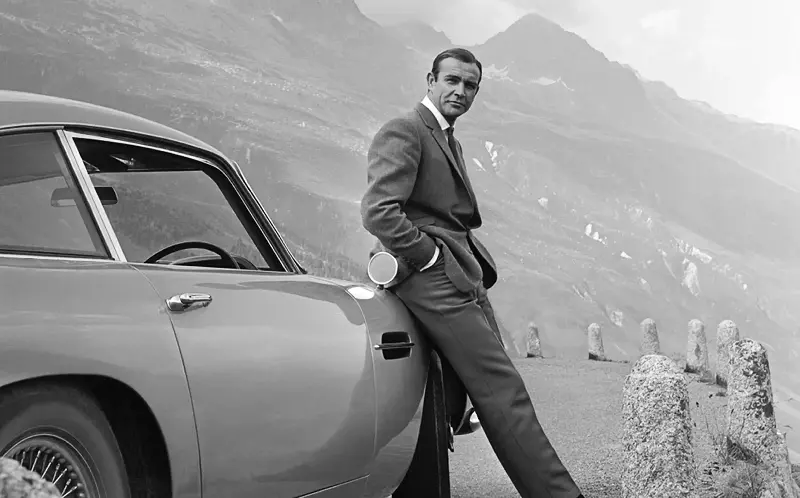
Consider Steve McQueen rattling the gearbox like a machine gun in Bullitt, or the Minis snarling through Turin in The Italian Job, or the Sweeney doing doughnuts round the London docks. Remember Bond’s DB5, which had an ejector button hidden inside the gearknob.
And yet, despite all this: manual is dying. This week’s figures show nearly 30 per cent of British driving tests are taken in automatics, up from 4 per cent in 2008. Manuals accounted for 55 per cent of new cars sold in 2019. This year, they account for less than 14 per cent. A generation is acquiring licences that legally forbid them from driving stick-shift.
Soon nobody will know the tiny, garlanded triumphs of the gearbox: the perfect hill start, the double declutch, the snarly machine obeying hand and foot in concert.
Instead, we shall glide about in humming pods that bong at us to have a coffee, or stay in lane. Every one of my adventures above would have been ruined by that infernal bonging.
The loss of the gearstick is also a parable. As machines take over human tasks, we will forget how to do them. Think how calculators killed long division. Think how sat nav killed map-reading.
Next, self-driving cars will kill driving altogether, and after that AI will take over the maths, the writing, the coding, the music-making. The machines will be better and we will turn into purposeless blobs.
It’s not an appetising prospect, so I intend to resist. Tomorrow I’ve got a Mazda booked on a car share, for a run to the garden centre. If you see some delusional old geezer racing around Crouch End, madly shifting gears like he’s north London’s McQueen, that’s me.