



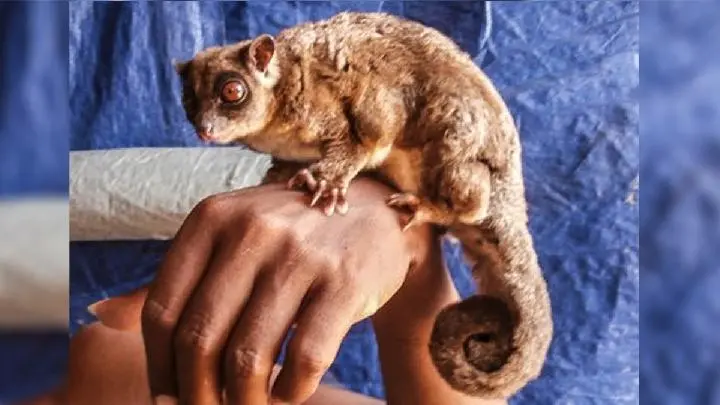
TEMPO.CO, Jakarta - A team of researchers from Australia has found evidence that two marsupial species, previously thought to have gone extinct 6,000 years ago, are still alive in the deep rainforests of the Vogelkop Peninsula in Papua, Indonesia. The two species are the long-fingered possum (Dactylonax kambuayai) and the ring-tailed glider (Tous ayamaruensis).
The types of possum and glider were identified as two 'Lazarus taxa' (species that appear to have come back from the dead) after the research team collected evidence from around the world. This evidence included the only known collection of specimens and local researchers' rare photographs, as well as fossil fragments.
The research was led by visiting researcher at the Australian Museum, Professor Tim Flannery, and the President and CEO of the Bishop Museum, Professor Kristofer Helgen. They then published their findings in the journal Records of the Australian Museum on March 6, 2026.
Quoting the Australian Museum's website, the research wouldn't have been possible without Flannery's good relationship with researchers from the University of Papua and their cooperation with the elders of the Maybrat and Tambrauw indigenous communities. The research team gained an understanding of the deep rainforest's location and the local wisdom regarding the two marsupial animals.
"The discovery of one Lazarus taxon, even if thought to have become extinct recently, is an exceptional discovery. But the discovery of two species, thought to have been extinct for thousands of years, is remarkable," said Flannery.
The professor added, "The findings underscore the critical importance of preserving these unique bioregions and the value of collaborative research in uncovering and protecting hidden biodiversity."
The long-fingered possum is a thick-lined marsupial with high adaptation abilities. This species is believed to have gone extinct from its habitat in Australia during the Ice Age.
The ring-tailed glider is the closest living relative of the Australian Greater Glider and represents the first new marsupial genus on the island of Papua (New Guinea) to have been discovered since 1937. Smaller than its Australian counterpart, with bare ears and a long tail that can grasp objects, the ring-tailed glider exhibits faithfulness to its mate. Each pair only has one offspring per year.
Like the greater glider, this species is found to prefer nesting in holes in the tallest trees of the forest, and therefore, is threatened by logging concessions.
The ring-tailed glider is considered sacred by several clans of the indigenous communities in Vogelkop Peninsula of Papua, including the Southwest and West Papua regions. This has contributed to the preservation of the animal's forest habitat over millennia. In the heart of its habitat grows giant kauri trees, which are believed by the local people to be the birthplace of all animals and humans.
The ring-tailed glider is known as Tous among the Tambrauw and Maybrat clans on the peninsula. This tiny animal is considered a manifestation of ancestral spirits.
"We worked very carefully and collaboratively with Tambrauw Elders," said team member Rika Korain, who is also a member of the Maybrat indigenous community. According to Rika, the process of identifying the two species would not have been possible without the cooperation of indigenous leaders. "This connection has been essential for ongoing work,” added Rika.
A researcher and lecturer at the Faculty of Education and Teacher Training, University of Papua, Aksamina Yohanita, expressed great pride in Papua's researchers contributing to this discovery. "[I] want to thank the people of the Misool, Maybrat and Tambrouw regions who supported us in the field,” she said.
Flannery explained that previously, both species were only known from their fossils originating from the Pleistocene era in Australia, and from Holocene fossils from early Pleistocene of Papua Island. "The Vogelkop is an ancient piece of the Australian continent that has become incorporated into the island of New Guinea. Its forests may shelter yet more hidden relics of a past Australia," the professor said.
Read: Indonesia, Malaysia Commit to Strengthen Cross-Border Wildlife Protection