



BLUE LAKE, North Cascades, Wash. — Rounding a bend, a clearing in the trail gave way to a golden vista. Larches dotted the bowl below the peaks and crowned the ridgeline.
“It's so stunning,” hiker Gray Winne said, taking in the larches for the first time as they crunched along the frozen path. “They're so … cool.”
Winne and Tayla Weaver wandered along the lake on Monday, pausing in awe of the amber majesty of larches young and old. Hundreds of hikers — including babies bundled in dense layers, corgi toes squelching through the thawing mud — had flocked to see the brief golden magic of larches, an iconic Northwest tree.
Washington is home to both Western and subalpine larches, coniferous trees that change color and drop their leaves in the fall. This year, the peak of larch season is winding down as they begin to shed their leaves.
These trees have been shaped by fire and extreme cold over millennia — and human-caused climate warming could strain the specialized adaptations of these trees. But the past offers tools for the trees’ resilience. Fire is an important tool to help maintain larch on the land by aiding in its regeneration, said Spencer Vieira, a fire ecologist who studied the relationship between larch and fire at the University of Montana.
Larches continue to dazzle visitors making their first treks into the trees’ rugged mountain homes. The phenomenon has been celebrated in a “larch march” popularized on social media in recent years.
Friends Winne and Weaver, both wildland firefighters, had just come off fires in Washington and Oregon as a record fire season in the Northwest winds down.
“They represent resilience,” Weaver said, of the trees. “And it’s a reminder to be humble.”
Larch ‘superpowers’
Pikas clambered over the snow-dusted talus slopes, their calls echoing over the lake. A mountain goat navigated the crowds of people, nibbling on bushes. Just after noon, the sun began to fade behind the craggy peaks, setting the crowns of larches aglow.
As the nights grow longer, larch takes its cue. Winter is coming.
It begins pulling the nutrients from its leaves (needles) back into its trunk. With the nutrients goes the green hue. They begin to turn gold, and the nutrients are stored in the trunk as energy for its spring awakening. Unlike its other coniferous counterparts, like fir, cedar or spruce, larch drops its needles before resting through the winter months.
They’re the only native deciduous conifer in the Western U.S.
“It's a deciduous thing living in an evergreen world, which makes it pretty unique, and it also gives it some superpowers,” said Katy Kavanagh, associate dean for Research at the Oregon State University College of Forestry.
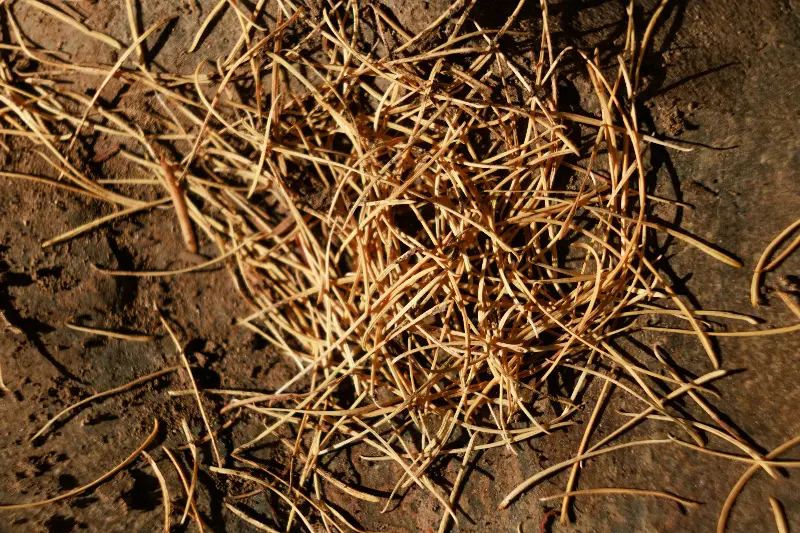
These delicate pale gold needles drifted down in the breeze, and swirled along the lakeshore as hikers paused to share meals and take in the view Monday.
To help endure harsh winter months, Kavanagh said, larch will draw all moisture in from its living buds on its branches. All that’s left behind is sugars and other compounds, basically antifreeze for the bud. Water is pulled down into less exposed areas and stored.
The tree must experience enough cold exposure over the winter months so it can respond to springtime cues, such as warming temperatures, Kavanagh said. Only then will bud break occur.
It’ll produce new needles and the cycle will begin again.
‘New norms’
In the West, fire has helped preserve the enduring magic of larches.
An ancient grove of Western larch near Seeley Lake, Mont., was stewarded by cultural fire, lit by Native people over millennia, Vieira said. Forest managers continue to use prescribed fire to maintain the grove.
Western larch needs open space to thrive, and those cleared-out spaces with open canopy after a fire give them the best chance at thriving.
Vieira found in his graduate research in the Columbia Basin that post-fire conditions were more important in influencing when seedlings could successfully establish and grow than current climate trends.
Recent research in the Selway-Bitterroot Wilderness suggests subalpine larch also benefits from fire. Fire was associated with greater subalpine larch regeneration, the research found.
In the North Cascades, the Upper Skagit people managed the land with fire for thousands of years to promote meadows and First Foods, said Scott Schuyler, an elder and Natural and Cultural Resources policy representative with the Upper Skagit Indian Tribe. Schuyler believes these burns assisted in the promulgation of larches in this area, as ancestrally Upper Skagit people would travel over the Cascade crest and had a presence as far as Lake Chelan.
Climate change will likely drive contractions in the warmer and drier portions of the Western larch’s range, Vieira said, while they may establish in cooler and wetter areas at higher elevations. But subalpine larch faces a different story. They’re essentially on islands in the sky — at the edge of where trees can survive. As conditions make it harder to live at the lower elevations of their range, they'll run out of space.
Subalpine larch, scientists fear, may struggle to migrate quickly enough to keep pace with climate change, given its relative isolation and slow reproduction.
The impacts of climate warming, such as low snowpack, heat and more overall variability, could affect these natural cues the larch has adapted to, said Kavanagh, of Oregon State. Snowpack insulates the subalpine larch, and the trees often won’t break bud until the snow melts off. But the loss of snowpack could change that. If larch doesn’t get enough cold temperatures, it may not break bud. Larch is also vulnerable to frost after it starts to awaken.
Where hikers may start to see these impacts is in the timing of the fall larch march.
If a warmer fall comes along, that could delay the development of the color, Kavanagh said. Or, she said, a drier fall could shorten the time the larches are gold before the needles fall to the ground. Kavanagh suggests people getting out for larch marches start keeping a record of when the trees begin to turn color and when the leaves fall each year.
“I think our generation is going to witness a lot of changes, and particularly over the next several decades,” Kavanagh said. “We can all become documenters of what used to be a fairly predictable process. Things are going to become less predictable. We have to set new norms.”