



Onions are a familiar food in the daily meals of many Vietnamese families. This bulb not only adds flavor to dishes but also provides antioxidants that are beneficial to health.
However, to maximize nutritional value and avoid the risk of harmful microbial contamination, Simone Harounian, a nutritionist in the US, says choosing fresh onions is crucial, according to the health website Health .
Choose onions that are firm and heavy.
Fresh onions feel firm, heavy, and solid when held. When gently squeezed, the onion does not become soft or mushy. This indicates that the inside is still intact and not spoiled.
Soft or mushy onions have usually started to rot from the inside. A common cause is onion neck rot, a type of fungus that develops after harvesting.
This type of fungus is generally not dangerous, but there have been reported cases of it causing allergy-like symptoms or lung infections.
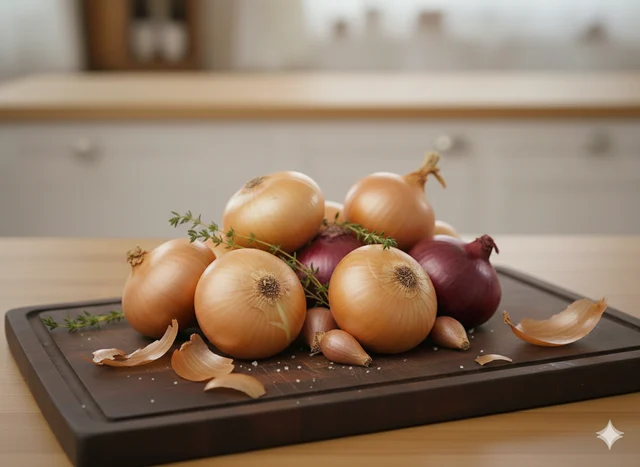
Choosing fresh onions is very important.
Photo: AI
Observe the outer layer carefully.
The dry outer layer of the onion acts as a natural barrier, protecting the onion from bacteria and pathogens. Fresh onions should have a dry, thin, non-moist skin that makes a rustling sound when touched.
After inspecting the surface, pay attention to the onion neck. After harvesting, the onion leaves are removed and the bulbs are dried. This process creates a dry and sealed neck, which helps prevent mold and extends shelf life. If the onion neck remains damp or soft, the onion will spoil more quickly.
Additionally, avoid tubers with black spots or dark streaks on the skin. These signs may be caused by black mold.
Do not choose onions that have sprouted.
Fresh onions should not have sprouts or green shoots growing from the top of the bulb. Sprouted onions indicate that the bulb is nearing the end of its shelf life and its quality is beginning to decline.
Onions that have sprouted are still edible. However, they tend to be more bitter and are better suited for cooking rather than eating raw.
Be wary of onions with an unusual smell.
Onions have a distinctive pungent smell when cut. However, when unpeeled, the onion should not have a strong odor. If the onion smells sour or vinegary before cutting, this is a sign that it is unsafe.
An unusual smell could indicate that the onions are rotting or contaminated with Burkholderia cepacia bacteria. This type of bacteria is particularly dangerous for people with weakened immune systems.
As long as they are fresh, all types of onions are beneficial to health. Onions are low in calories, high in fiber, and contain many plant compounds that help support the prevention of chronic diseases. After purchasing, onions should be stored properly to keep them fresh longer. Whole, unpeeled onions should be stored in a cool, dry, dark, and well-ventilated place.
Additionally, onions should be stored separately from other fruits and vegetables. Many fruits and vegetables release ethylene gas, which causes onions to spoil easily.