



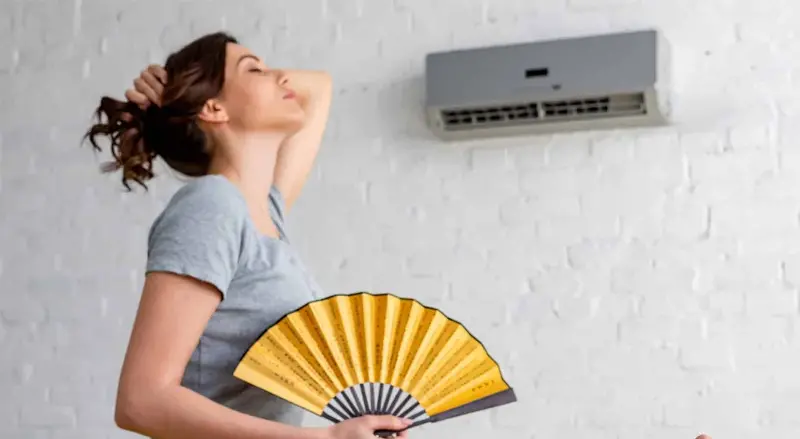
Some people even complain that it gets hotter and hotter at night, even though the air conditioner is running non-stop.
Why is the room still hot even though I left the air conditioner on all night?
The cause isn't just the air conditioner; it also stems from the room itself, the weather, and even very common usage habits.
Air conditioners don't create "infinite cold air."
Many people think that simply turning on the air conditioner will cool the room down regardless of how hot it is outside. But in reality, an air conditioner is just a heat transfer device: it draws heat from the room and pushes it out. When too much heat from the outside enters, the air conditioner may run continuously but still not be able to cope.

Why is the room still hot even though the air conditioner is on all night? (Image: Sortedelectrical)
During extreme heatwaves, outdoor temperatures can exceed 40 degrees Celsius. Roofs, concrete walls, and glass windows absorb heat all day. Even at night, they continue to radiate heat back into the room, acting like a giant "heater."
West-facing houses - the "enemy" of air conditioning.
This is a very common problem in urban areas like Hanoi or Ho Chi Minh City. Houses facing west often receive direct sunlight from noon to afternoon, causing the walls and windows to retain a lot of heat. Even after sunset, the walls remain scorching hot, and the heat continues to transfer into the room for hours. Many people have reported touching the walls or ceiling at night and still feeling the intense heat.
In that case, the air conditioner has to constantly fight against the heat being emitted, making it difficult for the room to cool down properly.
The room is too airtight but doesn't dissipate heat well.
Paradoxically, while a closed room helps keep things cool, excessive heat buildup can easily lead to stuffiness. For example, a small room with many appliances, a large number of people, and poor air circulation will cause CO2 levels to rise, making the air stuffy and creating a feeling of "difficulty breathing even with air conditioning."
This is why many people complain that the air conditioner is running but they still feel uncomfortable.
The air conditioner is dirty or has low power.
In many cases, the reason why a room remains hot even after the air conditioner has been on all night is very simple:
- The filter is too dirty.
- The outdoor unit is covered in dust.
- Low gas
- The machine is old and dilapidated.
At that point, the heat exchange capacity decreases sharply; the machine runs continuously but inefficiently.
Furthermore, many families install air conditioners with unsuitable capacity, so even when the air conditioner is on all night, the room remains hot. For example, if a room is large, has high ceilings, and lots of windows, but uses a small-capacity air conditioner, the air conditioner will almost certainly be exhausted on peak hot days.
Why does it get hotter as night falls?
It may sound illogical because outdoor temperatures usually drop at night. But many people still find it increasingly stuffy as the night progresses, with heat building up in their rooms for longer periods, leading to restless sleep even with the air conditioner on all night. The reason is:
Concrete and roofing materials release heat very slowly.
- The urban heat island effect causes cities to remain hot until nighttime.
In densely populated apartment complexes, the heat from thousands of air conditioner units, concrete, asphalt, and glass combine to create a "hot blanket" that blankets the residential area.
Setting the temperature too low can sometimes be counterproductive.
Many people have a habit of lowering the air conditioner to 16-18 degrees Celsius as soon as they get home, but this doesn't cool the room down as quickly as many people think.
Household air conditioners cool at a fixed capacity; simply setting it lower doesn't mean it will cool the room much faster. Conversely, overloading the machine wastes electricity, dries out the room quickly, and can cause users to feel tired and have headaches.
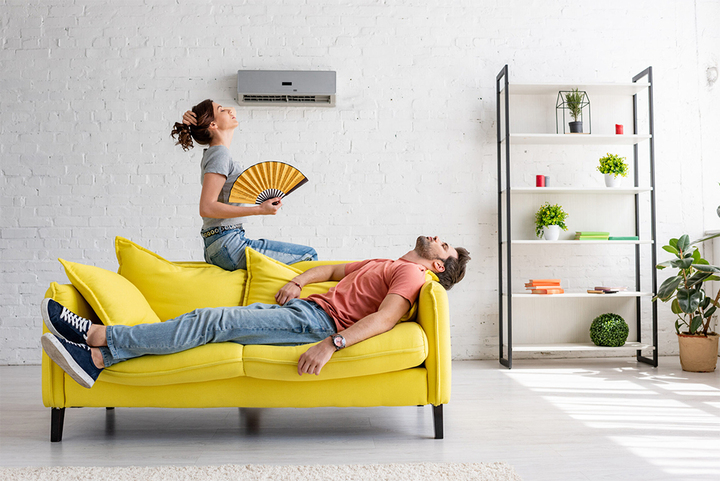
Many families install air conditioners with unsuitable capacity, so they leave the air conditioner on for a long time but the room remains hot.
In many cases, keeping the temperature around 26–28 degrees Celsius combined with a fan is more comfortable.
Things that silently make a room hotter.
Many people don't realize that there are many "heat sources" in the room, such as computers, TVs, mini-refrigerators, lights, electric stoves, and battery chargers.
Even the human body radiates heat. The more people in a room, the faster it heats up and becomes stuffy. This is why small bedrooms with many people are often very uncomfortable at night.
Why do I still sweat even when sleeping with the air conditioner on?
Some common causes include: excessively high humidity; heat-retaining bedding; poor room ventilation; unstable air conditioning; and heat buildup in walls/ceilings.
Additionally, if you turn on the air conditioner and then cover yourself with a thick blanket, or if the room is too stuffy, it can easily create a feeling of stuffiness, heat, and discomfort.
What can I do to make the room cooler without turning the air conditioner down too low?
Some methods are far more effective than simply lowering the temperature by 20 degrees:
- Limit heat from the outside: Apply heat-insulating film, use sun-blocking curtains, shade windows, and plant trees to create shade.
- Reduce heat buildup: Open windows for ventilation in the early morning or late at night, and avoid turning on many unnecessary electrical appliances.
- Increase cooling efficiency: Clean the air conditioner regularly, use a fan to circulate the cold air, and keep doors closed when the air conditioner is on.
Air conditioners cannot completely "defeat" extreme heat. On days when outdoor temperatures reach 40 degrees Celsius, many urban homes resemble "giant heat-trapping concrete blocks." At such times, air conditioners are no longer simply cooling devices, but almost constantly "battle" against the enormous amount of heat from the environment.
Therefore, the feeling of having the air conditioner on all night but the room still feeling hot isn't necessarily because you're "hot-tolerant," but sometimes it's because the room is actually retaining heat incredibly well.