


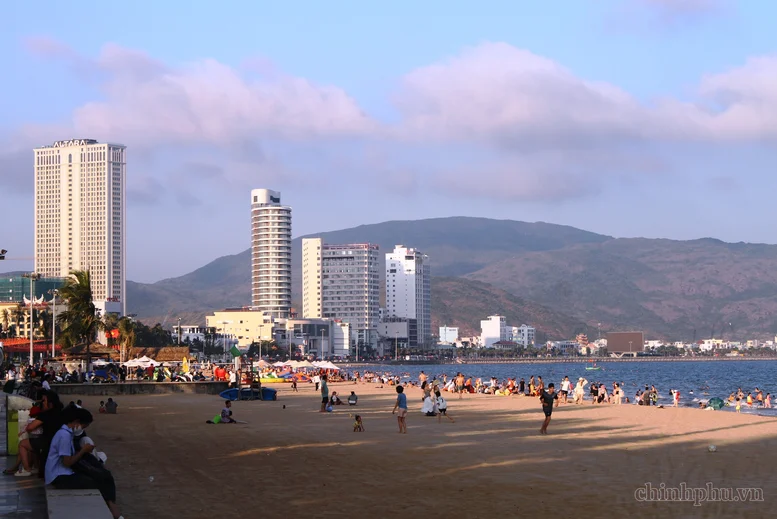
Tourists participate in recreational activities and swim at the beach in Quy Nhon, Gia Lai province - Photo: VGP/Nhat Anh
Leveraging the advantages of "sea - forest - plateau" to build a new tourism brand.
According to Ms. Do Thi Dieu Hanh, Director of the Department of Culture, Sports and Tourism, Gia Lai's hosting of the National Tourism Year 2026 is an honor and affirms the province's potential and efforts in tourism development.
After expanding its development area, Gia Lai possesses a diverse system of resources including seas, forests, plateaus, cultural heritage, and rich ecosystems. Notable examples include Bien Ho Lake, Chu Dang Ya Pagoda, Kon Ha Nung World Biosphere Reserve, conservation areas, national parks, the Central Highlands Gong Culture Space, along with a system of cultural heritage sites and over 134 km of coastline.
From promoting individual destinations, Gia Lai is shifting towards building a tourism ecosystem that links the sea and highlands, developing along product chains and targeting specific customer markets, aiming to create a destination brand with its own identity and competitiveness.
In 2026, the province will organize numerous promotional events, including the National Tourism Year Opening Week and the Gia Lai Summer Tourism Festival series "Amazing Destinations," contributing to spreading the image of local tourism. Along with promotion and advertising, Gia Lai will focus on renewing its tourism products, using beach and highland tourism as a strategic axis, combined with cultural, ecological, resort, community, MICE, sports, and science tourism to enhance the visitor experience and extend their length of stay.
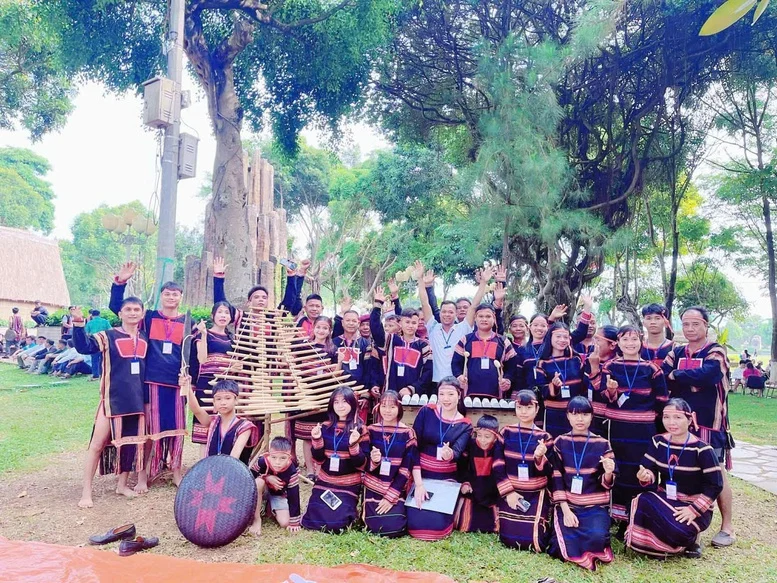
The weekend gong performance program, presented by the Jrai artisans' team from Chơ Ma village, Ia Pa commune, at the Great Unity Square, Pleiku ward - Photo: Department of Culture, Sports and Tourism.
Many new tourism products have been introduced, ranging from food streets and community-based tourism to ecotourism and cultural-historical sites. Community-based tourism villages have also expanded their experiential activities linked to local culture, such as coffee harvesting, brocade weaving, making bamboo-cooked rice, enjoying gong music, and exploring the lives of the Bahnar and Jrai people.
Alongside this, key transportation projects such as the Quy Nhon - Pleiku expressway, the upgrading of Phu Cat Airport, the expansion of Quy Nhon port, and infrastructure for receiving international cruise ships are gradually being completed, strengthening connectivity between the coast and the Central Highlands. Gia Lai is also attracting investment in resort complexes, entertainment centers, golf courses, MICE facilities, and experiential products associated with the sea, forests, and local culture.
In the first six months of 2026, Gia Lai welcomed approximately 8.75 million visitors, a 19% increase compared to the same period last year; revenue reached approximately 19,010 billion VND. International visitors were estimated at 130,000, an increase of nearly 80%. The province currently has 1,257 accommodation establishments with more than 23,000 rooms.
Creating "magnets" to attract customers.
According to Do Thi Dieu Hanh, Director of the Department of Culture, Sports and Tourism of Gia Lai province, despite achieving many positive results, local tourism still has limitations in terms of unique products, night-time economy, length of stay, spending levels, high-quality human resources, and digital transformation.
To achieve the goal of attracting approximately 18.5 million tourists by 2030, including 1.1 million international visitors, and generating revenue of 35,000 billion VND, Gia Lai will focus on developing its own branded products and exploiting the unique advantages of its coastal and highland landscapes.
Tourist routes connecting Quy Nhon with islands and lagoons; the Tonle Sap Lake with the Kon Ka Kinh, Kon Chu Rang, and Kon Ha Nung ecosystems; along with Bahnar and Jrai cultural villages, night tourism products, and cultural and culinary spaces are expected to become new "magnets" attracting tourists.
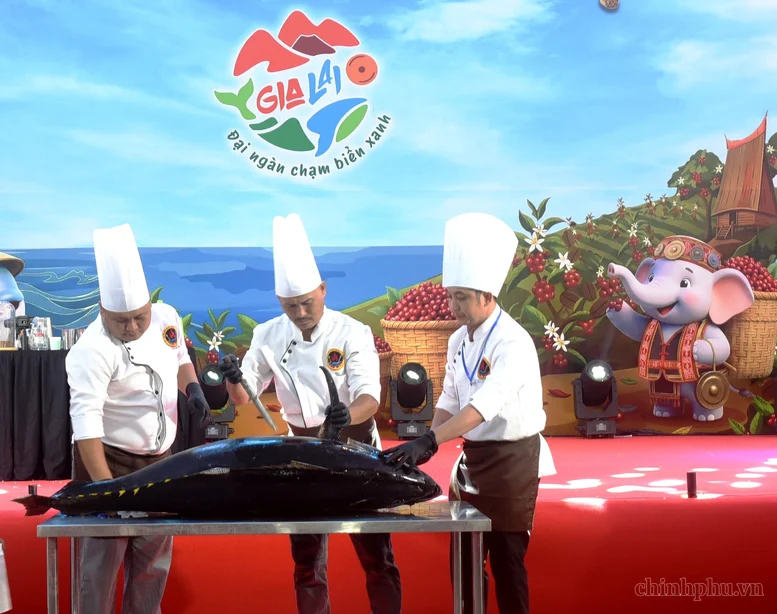
In Gia Lai, tourists can enjoy the local specialty of ocean tuna - Photo: VGP/Nhat Anh
Along with improving infrastructure, enhancing the investment environment, and attracting strategic investors, Gia Lai focuses on developing modern tourist areas, resorts, and entertainment complexes; building a civilized tourism environment with the message "3K - 3A", aiming for every citizen to become a "tourism ambassador".
The province is stepping up digital marketing efforts, strengthening cooperation with airlines, travel agencies, OTA platforms, KOLs, KOCs, and international media; while expanding into key markets in Asia, Europe, North America, and Australia.
Gia Lai is also strengthening its links with Ho Chi Minh City, Hanoi, and other localities along the East-West economic corridor, developing inter-regional tourism routes connecting the sea with the mountains, culture with resorts and experiences. The province continues to support community tourism and promote international charter flights to Phu Cat Airport, thereby expanding connectivity and attracting high-spending tourists.
With determination and the support of the entire political system, business community, and people, Gia Lai tourism is expected to continue its breakthrough, becoming an attractive destination in the Central Highlands region and a new growth pole for Vietnamese tourism.
Nhat Anh