



Wall squatting is an easy-to-perform static muscle contraction exercise that requires no equipment, helping to increase muscle strength, improve posture, support blood pressure control, and reduce knee joint pain.
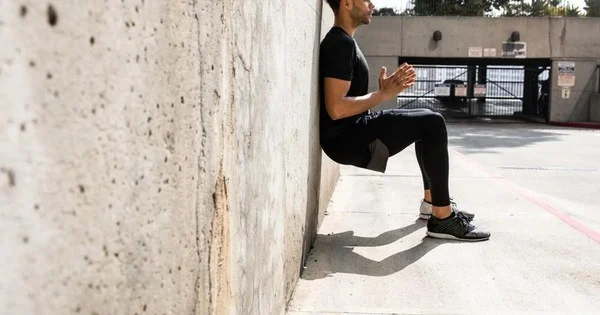
Among current forms of exercise, simple, easy-to-do exercises at home are gaining increasing attention, including the wall sit. Although it doesn't require much movement, this exercise still puts significant pressure on the muscles, especially the thighs and torso.
Wall squats belong to the group of isometric exercises (static muscle contraction), meaning the muscles are activated but their length does not change during the exercise. The exerciser maintains a single position for a certain period of time, helping to increase endurance and improve muscle control.
Unlike traditional squats, this exercise uses wall support, reducing pressure on the spine and making it suitable for a wide range of people, including beginners or those with limited fitness levels.
1. Benefits of wall squats
1.1 Strengthening thigh and core muscles
Squatting against a wall significantly impacts the quadriceps, hamstrings, and gluteal muscles. These are crucial muscle groups for daily activities such as standing up, sitting down, and climbing stairs. Additionally, the exercise activates the core muscles, including the abdominal muscles, lower back muscles, and pelvic floor muscles. When these muscle groups are strengthened, spinal stability improves, contributing to a reduced risk of lower back pain.
1.2 Supports weight management and metabolism
Although not a cardiovascular exercise, wall sitting still contributes to energy expenditure. Maintaining good muscle mass helps increase the body's basal metabolism, thereby supporting long-term weight management. Recent studies show that increasing strength training, including isometric exercises, can help improve body composition, reduce fat, and increase lean muscle mass.
1.3 May help lower blood pressure
One notable point is that isometric exercises such as wall squats are associated with improved blood pressure. Several meta-analysis studies in recent years have noted that regular isometric exercise can help lower systolic and diastolic blood pressure in adults. The mechanism may be related to improved vascular endothelial function and vasodilation. However, individuals with cardiovascular disease should consult their doctor before engaging in such exercises.
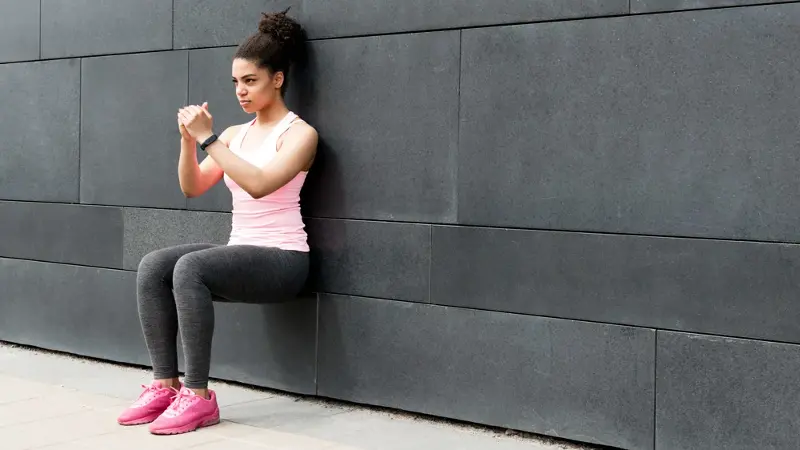
Wall squats can help lower blood pressure.
1.4 Improve posture and reduce back pain
Prolonged sitting and lack of movement are common causes of poor posture, especially among office workers. Wall sit helps "reset" posture by forcing users to keep their spine straight, shoulders open, and core muscles engaged. Maintaining correct posture during the exercise improves posture awareness in daily life, thereby reducing hunching or spinal pain.
1.5 Supports pain relief and knee joint stability.
Knee pain is a common problem, especially among middle-aged people or those who are sedentary. Squatting against a wall helps strengthen the muscles around the knee joint, particularly the quadriceps – a crucial element in joint stability. When these muscles are stronger, the pressure on the knee joint decreases, thereby improving pain symptoms and increasing mobility. However, people with severe knee injuries should exercise at a mild level and under professional guidance.
1.6 Improve balance and motor coordination
Static exercises like squatting against a wall help improve coordination between muscles and the nervous system. When the body maintains a stable posture, the brain must constantly adjust signals to maintain balance. This improves body control, contributing to a reduced risk of falls, especially in older adults.
1.7 Suitable for a wide range of users, easy to apply.
A major advantage of wall squats is that they require no equipment and are not space-dependent. People can practice them at home, at work, or anywhere with a flat wall.
The exercises are also easy to adjust to your physical condition:
- Beginners: Maintain a larger knee angle (less flexion), for a shorter duration.
- For experienced individuals: Increase the degree of knee flexion and extend the holding time.
- Advanced trainees: May incorporate lighter weights or single-leg lifts.
2. The correct way to do it
To ensure safety and maximize benefits, the correct techniques must be followed:
- Stand with your back against a flat wall, feet hip-width apart.
- Take one or two steps forward.
- Slowly slide your back down the wall until your knees bend (this can be at a 45–90 degree angle depending on your fitness level).
- Keep your back, shoulders, and head pressed against the wall.
- The weight should be concentrated on the heel, not the toes.
- Hold the pose for 10–60 seconds, then rest.
3. Some things to keep in mind when exercising.
- To ensure safety, please note:
- Do not let your knees go past your toes.
- Do not hold your breath while holding the pose.
- Stop exercising if you experience sharp pain in your knees or back.
- Start with light exercises and gradually increase the intensity as you improve.
Wall squats are a simple exercise that offers many health benefits, from strengthening muscles and improving posture to helping control blood pressure and protecting knee joints. With the advantage of being easy to perform and requiring no equipment, it's a suitable option for many people looking to maintain daily physical activity. Maintaining regular practice, using the correct technique, and adapting to your physical condition are crucial for achieving long-term results.
Please watch the video for more information: