


1. Why has the Philippines temporarily suspended exports of purple yam?
- 1. Why has the Philippines temporarily suspended exports of purple yam?
- 2. What health benefits can purple sweet potatoes offer?
- 3. How to eat purple sweet potatoes to maximize their nutritional value?
The Department of Agriculture (DA) has indefinitely suspended exports of fresh ube – purple yam, often referred to as purple sweet potato on social media – to secure a scarce supply of seeds, as the Philippines seeks to expand domestic production and turn the crop into a more lucrative export commodity.
The Bureau of Plant Industry (BPI) imposed a suspension in mid-August, including on fresh purple yam tubers and propagation material, regardless of whether the shipment was for consumption, cultivation, or research.
Agriculture Secretary Francisco P. Tiu Laurel Jr. said the restrictions were aimed at keeping domestic seed sources available while the agricultural sector builds production capacity.
Meanwhile, this purple yam variety is becoming a popular ingredient in many markets. Its eye-catching purple color has led to an increasing number of ube appearing in desserts, drinks, cakes, and foods in the US, UK, and several other countries.
According to the Financial Times, this vibrant purple yam, a staple in global coffee chains and a viral sensation on Instagram and TikTok, may soon become scarce. It has found its way onto menus at cafes, bakeries, and even Michelin-starred restaurants in the US and UK. Widely used in lattes, pastries, and desserts, the yam is being hailed as the new matcha.
Faced with supply constraints, the Philippines has chosen to prioritize the domestic market and strengthen production before further boosting exports.
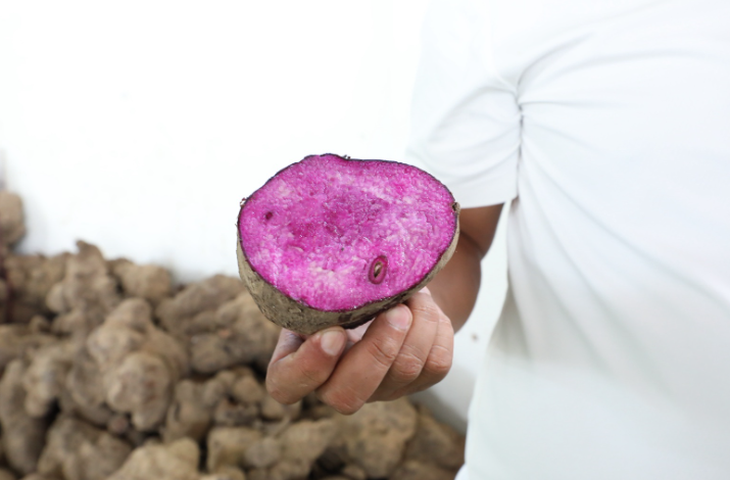
The Philippines has just issued a temporary ban on the export of fresh purple yams amid declining domestic supply and surging international demand. (Photo: DA)
2. What health benefits can purple sweet potatoes offer?
2.1 The color purple creates visual appeal for the dish.
Ube is a type of purple yam commonly used in Filipino cuisine . This tuber has a mildly sweet taste and provides fiber, resistant starch, and several vitamins, minerals, and antioxidants.
The most notable characteristic of purple sweet potatoes is their anthocyanin content – a group of plant pigments that give them their distinctive purple color. Anthocyanins are also present in many red, purple, or blue foods such as berries and purple cabbage. These compounds possess antioxidant activity. Diets rich in anthocyanin-containing foods have been studied for their association with cardiovascular health and inflammatory markers, but it should not be assumed that purple sweet potatoes alone can prevent or treat cardiovascular disease.
2.2 Supplementing with antioxidant compounds
According to health, the deep purple color of purple yams comes from anthocyanins. These antioxidant compounds have the potential to help protect cells from the effects of free radicals and oxidative stress. A systematic review published in Food & Function in 2024 assessed the impact of anthocyanin-containing foods and supplements on oxidative stress, inflammation, and several markers related to cardiovascular health.
This helps explain why foods rich in plant pigments, including purple foods, are increasingly being considered in healthy diets.
2.3. Provides fiber and resistant starch that are beneficial for the gut.
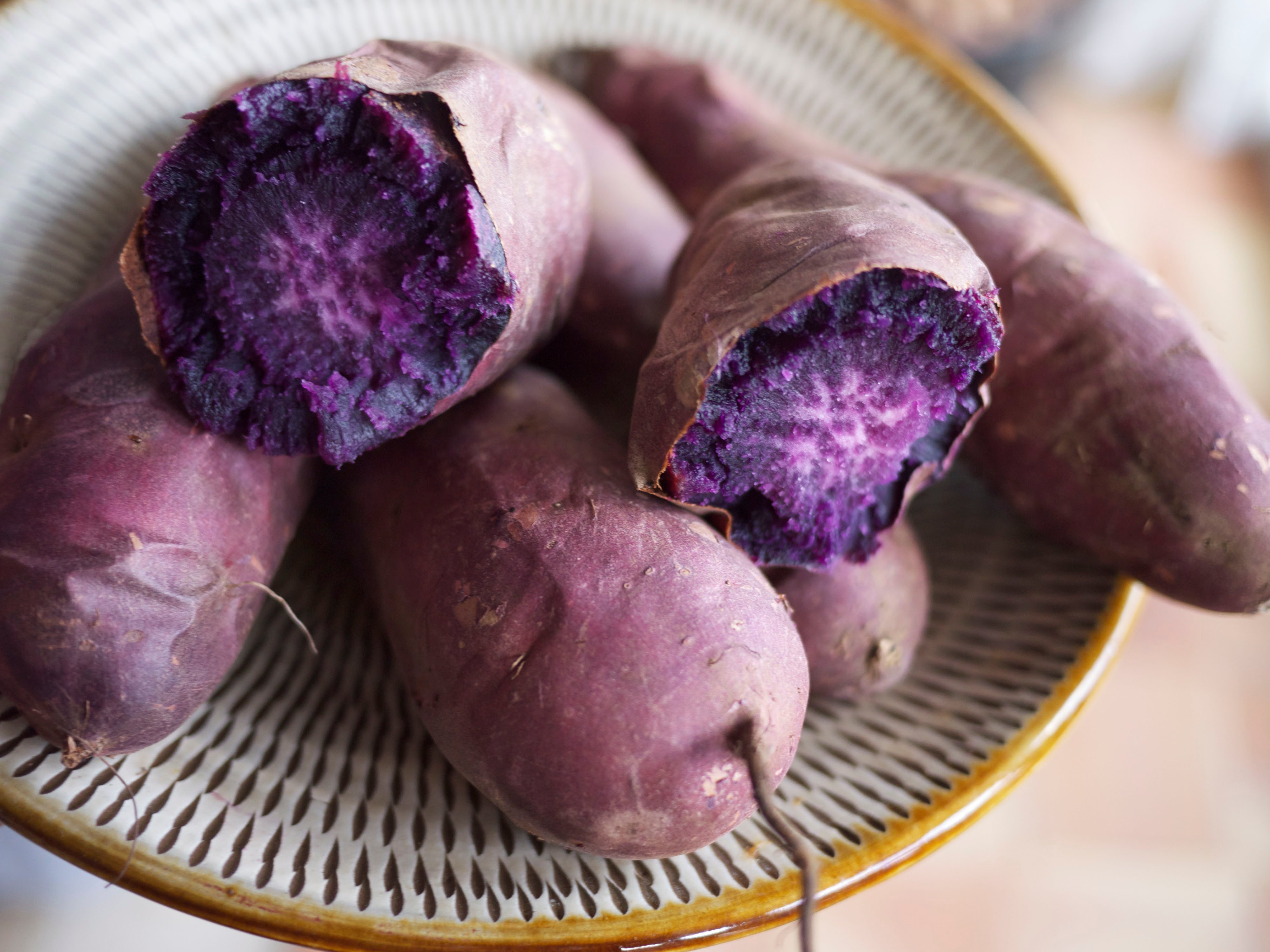
Purple yams provide fiber and resistant starch. Resistant starch is a type of carbohydrate that is not completely digested in the small intestine but travels down to the colon, where a portion is fermented by gut bacteria. This process produces short-chain fatty acids (SCFAs), metabolites that play a role in the environment and protective barrier of the colon.
The fiber in purple yams also contributes to maintaining bowel motility and may support a more diverse gut microbiome.
2.4 May help control blood sugar
Despite its natural sweetness, purple yam contains fiber and resistant starch, components that can slow down the digestion and absorption of carbohydrates. Some studies suggest that resistant starch may reduce postprandial glycemic spikes and insulin response. Studies on anthocyanin-rich foods have also noted associations with several glycemic control indicators.
However, people with diabetes still need to count purple yam towards their total carbohydrate intake. Preparation methods and serving sizes also affect glycemic response.
2.5 Provides some vitamins and minerals
Purple sweet potatoes contain several vitamins and minerals such as vitamin C, vitamin A, and potassium. Vitamin C is involved in immune function, skin health, and antioxidant activity. Vitamin A is essential for vision and immune function. Meanwhile, potassium plays a role in fluid balance, nerve function, and muscle contraction.
However, purple yam is not a prominent source of all these micronutrients. Its value lies in contributing to the diversity of foods and nutrients in the diet.
2.6 May contribute to protecting cardiovascular health
Purple yams contain fiber, potassium, and anthocyanins – components of interest in cardiovascular health research. Diets high in fiber are associated with lower LDL cholesterol levels. Dietary potassium also plays a role in regulating blood pressure through its influence on sodium balance and vascular function.
Therefore, incorporating purple yam into a varied diet rich in fruits and vegetables and low in ultra-processed foods may be a beneficial option for cardiovascular health. However, purple yam should not be considered a food that can treat high blood pressure or cholesterol disorders.
2.7 Good for brain health
The antioxidant compounds in purple yam have also been studied for their potential impact on oxidative stress and brain-related inflammation. Several reviews and meta-analyses of dietary anthocyanins have noted associations between supplemental anthocyanin sources and several aspects of cognitive function such as attention, executive function, and memory.
2.8 Fiber and resistant starch may support weight management.
Fiber helps increase feelings of fullness and slows down digestion, which can contribute to limiting food intake. Resistant starch has also been studied for its ability to increase satiety and its impact on the gut microbiome. This is one of the reasons why foods rich in fiber and resistant starch are often included in weight management diets.
However, purple yams still provide carbohydrates and energy. The benefits for weight management depend on the overall diet, portion sizes, and activity level, not just one food item.
2.9 Providing nutrients
According to nutritional information used by Health, 100g of purple yam provides approximately:
- 120 kcal;
- 27g of carbohydrates;
- 4g of fiber;
- 1g of protein;
- Almost no fat.
Thus, the remarkable aspect of purple yam lies not only in its color but also in the combination of carbohydrates, fiber, resistant starch, and plant compounds.
3. How to eat purple sweet potatoes to maximize their nutritional value?
Purple sweet potatoes can be prepared similarly to many other types of sweet potatoes, such as steaming, boiling, or baking. They can be mashed and used as a topping, added to smoothies, oatmeal, or used in various baked goods. The important thing is to prioritize preparation methods that minimize added sugar and fat, especially when the goal is to control calorie intake, blood sugar, or weight.
The growing interest in ube – purple yam – can be attributed to a combination of its distinctive color, culinary value, and nutritional content . The Philippines' temporary suspension of fresh purple yam exports is therefore not just a matter of supply, but also highlights the increasing appeal of a root vegetable once primarily known for its local cuisine.