


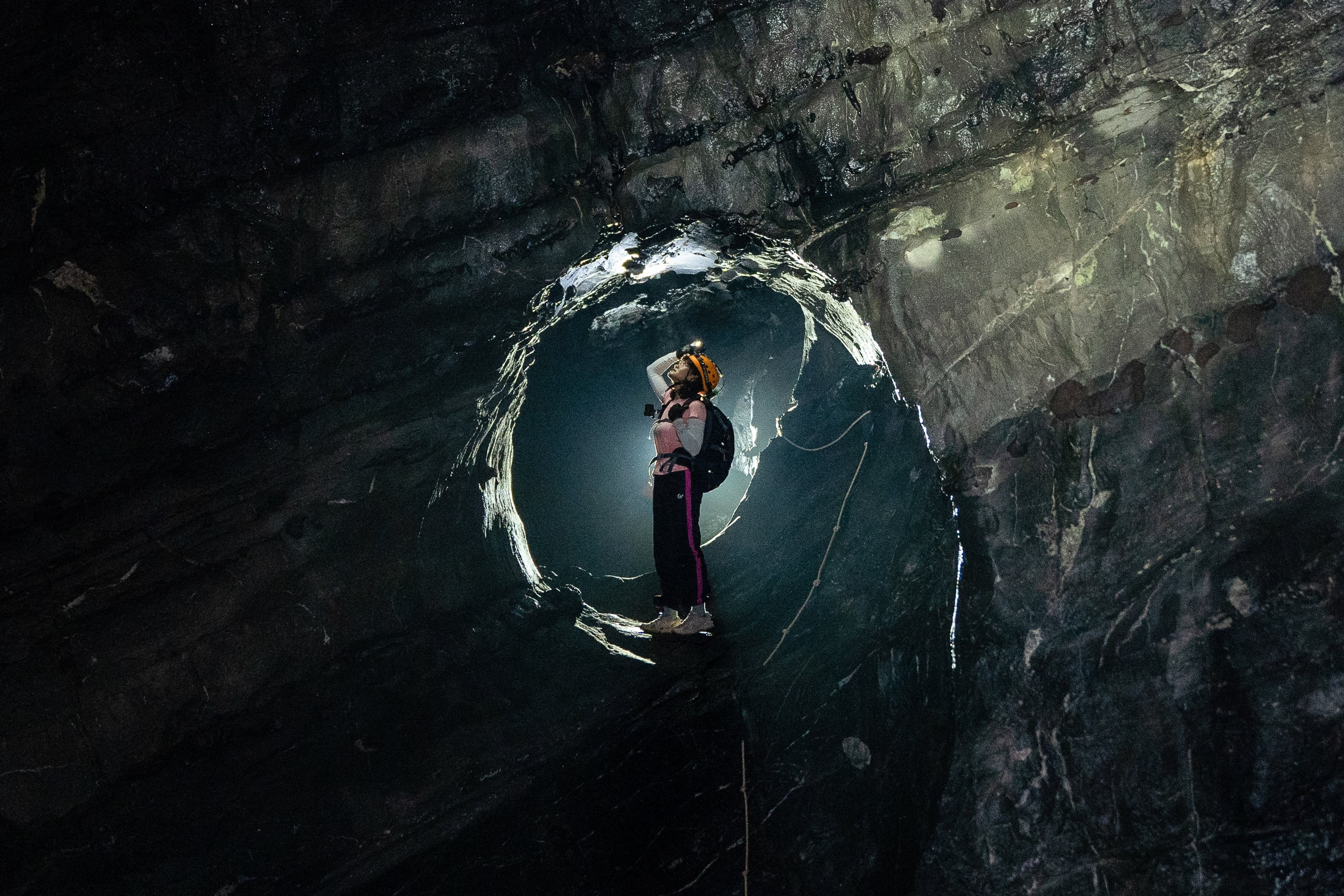
Turning around, the light from Lee Cobaj's helmet illuminated the enormous, stacked golden stalactites, resembling jellyfish-shaped chandeliers about 15 meters high. A few steps further, the light shone down on shimmering white rock formations, looking like a frozen avalanche.
Through a jagged bend in the rock, soft, large rock formations, so large they could be hidden within, gradually emerged. Above were gleaming stone towers that reminded her of the structures atop the Sagrada Familia church (Barcelona, Spain ).
Behind them, darkness gradually closed in, returning the eerie scene to the night.
"The cave is large enough for a Boeing 747 to fly through."
Cobaj is a travel expert for the renowned British newspaper, the Telegraph . The sights before her were not scenes from a science fiction movie. Cobaj was deep inside Hung Ton Cave (locally known as Hedgehog Valley), nestled in the limestone mountains of Quang Binh (now Quang Tri), a region with over 500 natural caves and crevices.
Among them is Son Doong, the world's largest natural cave by volume. Cobaj describes the interior space as so vast that "a Boeing 747 could fly through the corridors," while St. Paul's Cathedral in London (England) could fit inside the largest chamber.
|
|
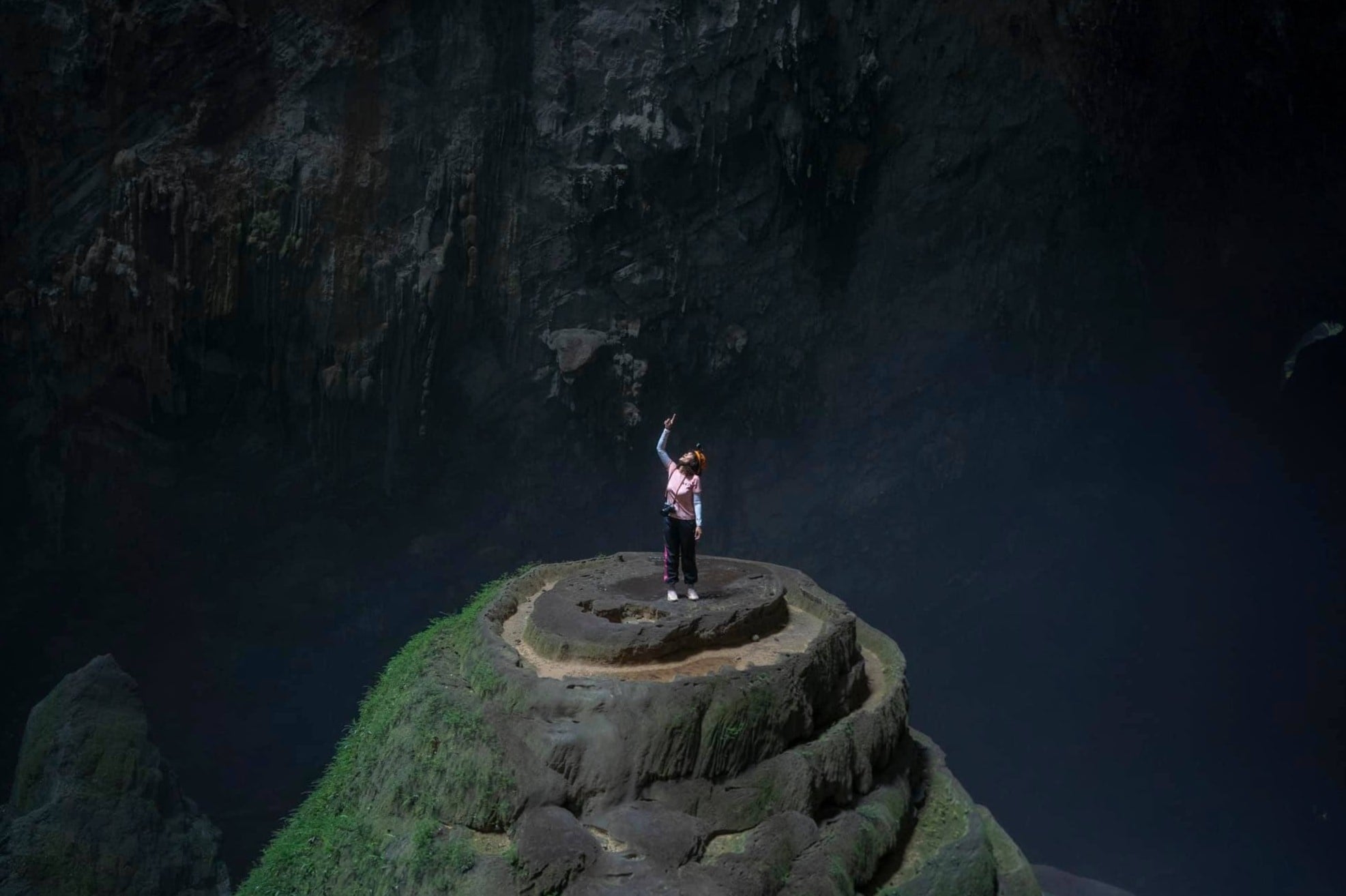
Tourists explore Son Doong Cave, the largest cave on the planet, located in the core area of Phong Nha - Ke Bang National Park in 2023. Photo: Linh Huynh .
At approximately 9 km long, Son Doong even has its own tropical forest system and climate. Coconut palms and wild fig trees sprout through two sinkholes where the cave ceiling has collapsed. The tree canopy is covered in a layer of mist formed by the temperature difference between the cool air inside and outside the cave.
Locals were unaware of this enormous geological structure until 2009, when the British Cave Research Association discovered the entrance with the help of Ho Khanh, a forest worker who had stumbled upon the cave during a rainstorm nearly 20 years earlier.
It's not just Son Doong.
According to Cobaj, Son Doong Cave is not for the average tourist, including herself. Tours are already fully booked until 2028, so she switched to exploring the Tu Lan cave system.
This 10km tour lasts 5 days and 4 nights, featuring trekking through the forest, crossing streams, swimming through underground rivers, and exploring 8 caves in the Tú Làn cave system. The tour is comparable in difficulty to more intensive expeditions such as Sơn Đoòng and Hang Ba.
In the morning, the group of nine tourists and six guides left the camp. The calls of red-necked woodpeckers and brown hornbills echoed across the fields at dawn.
The group passed through golden rice paddies awaiting harvest, surrounded by nearly symmetrical, rounded limestone mountains. Cobaj likened the shape of these mountains to nuns bowing in prayer.
|
|
|
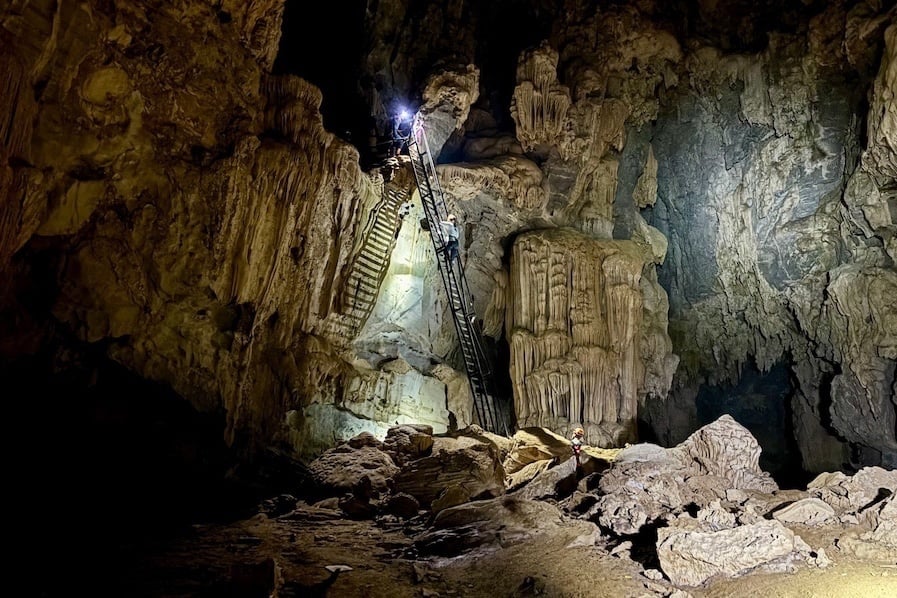
Tourists wear safety harnesses as they descend the steep stairs during their exploration of Hung Ton Cave. Photo: Lee Cobaj/Telegraph. |
Hoang Duc Huy, a 24-year-old tour guide from Phong Nha town, had never been to Son Doong Cave. Huy had only been working for the exclusive operator of Son Doong cave exploration tours for four months, while tour guides must have at least two years of experience to lead tourists to this cave.
Like his colleagues, Huy wears specialized sandals to avoid developing athlete's foot, a condition that can occur from frequently wading through mud and working in damp conditions.
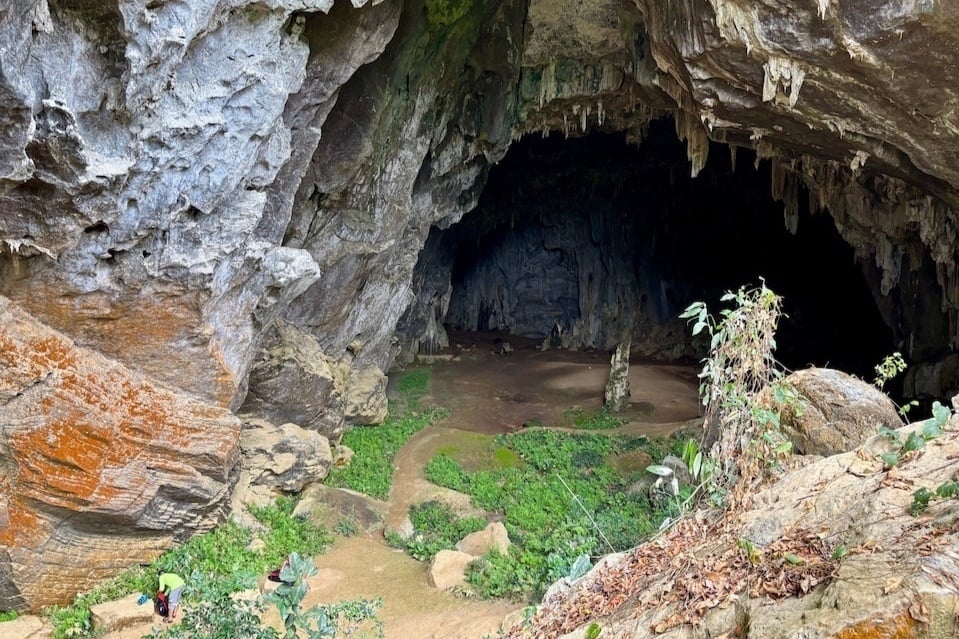
The group's first stop was Rat Cave. Before entering, everyone was reminded to avoid stepping on the native vegetation that covered the cave entrance. With headlamps on, they passed through a tall, heart-shaped dome, stepping into a space filled with stalactites and stalagmites that were approximately 400 million years old.
Afterward, the group continued climbing over the rocky, tangled mountain peaks and slippery muddy sections. Their bodies were covered in red clay after the climb, but another experience awaited them on the other side. After putting on life vests and helmets, the group plunged into the Rào Nan River, which flows both above and below the Hung Ton cave.
|
|
Chuot Cave is a limestone cave with ancient stalactites and stalagmites. Photo: Lee Cobaj/Telegraph.
Cobaj had initially thought it would be a peaceful river float. However, the rains in Laos caused the murky white water to rise, sweeping the group through dark caves and tunnels. They repeatedly crashed into grooved rock walls, glided over rocks eroded by time, before being pushed out into a blue lake surrounded by towering limestone mountains.
To explore Hung Ton Cave, visitors need to climb a 15-meter-high staircase, go swimming, and "search for fossils dating back to the Devonian period," as one female visitor put it.
At the end of the journey, each person was awarded a bamboo medal. Cobaj expressed that he "truly deserved" the reward, proudly wearing it on his way back to his hotel in Phong Nha town.
In the evening, she explored the small streets of Phong Nha, visiting local businesses. She enjoyed the feeling of having stumbled upon a pristine corner of a country that is becoming increasingly well-known to tourists.
"In a landscape that has remained virtually unchanged for hundreds of millions of years, I only hope that Phong Nha will retain that appearance for millions more years," Cobaj wrote.
|

|
Lee Cobaj (far right) and members of his team receive bamboo medals after completing their journey. Photo: Lee Cobaj/Telegraph.