


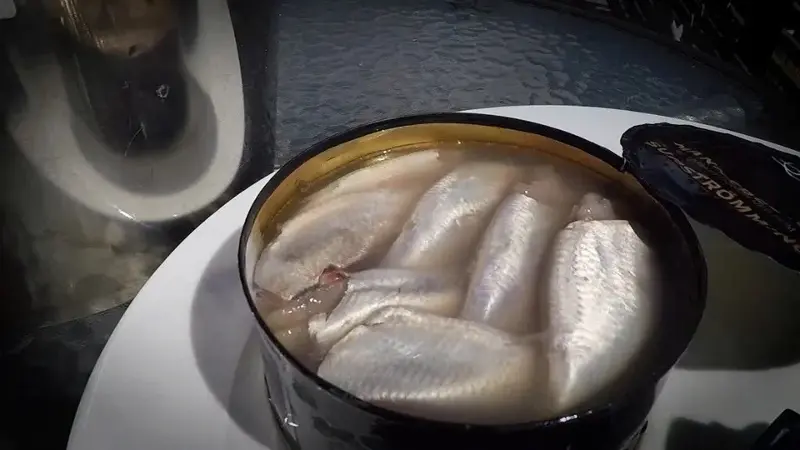
Surströmming is a traditional Swedish fermented Baltic herring dish.
In the world of gastronomy, few dishes generate as much controversy and curiosity as Surströmming, the traditional Swedish fermented herring. With its pungent odor often described as a mixture of rotten eggs, rancid butter, and decaying garbage, Surströmming has become a nightmare for many international travelers.
However, behind that bulging, seemingly "exploding" box of herring lies a story of historical ups and downs and a very complex biochemical mechanism.
Why does a developed Nordic country like Sweden maintain and take pride in such a pungent dish? To answer this question, we need to look back at history from the 16th century and examine this dish from different perspectives.
The survival challenge and salt scarcity
From a historical and geographical perspective, Surströmming did not originate from a peculiar culinary preference, but rather as a result of poverty and survival instincts. In the 16th century, under the reign of King Gustav Vasa, Sweden was embroiled in constant wars that devastated its economy .
For people in Northern Europe, storing food to survive the harsh and long winter was a matter of survival. At that time, salting was the most common method of preserving fish. However, salt was an expensive and scarce luxury item due to controlled supply.

Swedes eat fermented herring with bread, sour cream, onions, and boiled potatoes. Photo: CT.
Faced with this economic dilemma, fishermen along the northern coast of Sweden have found a clever compromise: fermentation. Instead of using enormous amounts of salt to dry the fish, they use only a very small amount, just enough to prevent the fish from completely rotting, but still allowing beneficial bacteria to break down the protein.
This method not only saves salt but also allows the fish to be preserved for years. From a food source that helped farmers and soldiers during wartime, Surströmming gradually became an indispensable part of life for people in Northern Europe.
Decoding the "destructive" smell of rotten Swedish herring.
To understand why Surströmming has such a challenging aroma, we need to delve into the chemical principles of the natural fermentation process. Baltic herring are caught in the spring, just before spawning season, to ensure optimal fat content. After being cleaned, the fish are soaked in saturated brine for about two days to remove the blood, then transferred to a more dilute brine solution and fermented in sealed containers for 1-2 months.
During this stage, a natural enzyme found in the herring's spine combines with the bacterium Haloanaerobium to begin the biodegradation process. This process produces a complex of organic compounds including: Propionic acid, which creates a pungent odor; Butyric acid, which creates a rancid butter smell; and, most notably, Hydrogen sulfide, the main culprit behind the characteristic rotten egg smell.
Every July, the fish are packed into tin cans. However, the fermentation process doesn't stop but continues inside the sealed can. Gases are constantly being produced, causing the lid and bottom of the can to swell over time. This buildup of pressure and biogas is the reason why opening a can of Surströmming always produces an explosive, strongly permeable odor.
The art of enjoying Swedish fermented herring.
It would be a huge mistake to judge Surströmming solely by its smell. Swedish connoisseurs assert that behind that terrible odor lies a subtle, rich, salty, and slightly tart umami flavor. However, to truly appreciate it, diners must adhere to strict rules of tasting.
The first unwritten rule is never to open a can of fish inside the house. The pressure inside the can can cause the fish juices to splash out, and the smell will linger on furniture for days. The safest way is to open the can outdoors, or immerse the entire can in a basin of cold water when opening to allow the pressure to dissolve the gas, preventing the odor from spreading.
Swedes rarely eat fermented herring directly. The culinary art lies in the balance. The fish is skinned, deboned, and cut into small pieces. These are placed on a crispy flatbread, served with sliced boiled potatoes, chopped red onions, sprinkled with chives and dill, and topped with sour cream. The sweetness of the potatoes, the pungency of the onions, and the mild richness of the sour cream soften the harsh saltiness of the fish, creating a unique symphony of flavors in the mouth. The meal is often paired with a cold beer or traditional snaps for dessert.
Why are Swedes still so fond of fermented herring today?
Today, with salt incredibly cheap and freezing technology having advanced significantly, Swedes no longer need to eat fermented fish to survive. So why does this dish still exist?
The answer lies in cultural values and pride in identity. On the third Thursday of August each year, Swedes enthusiastically celebrate "Surströmmingspremiär" (The Fermented Herring Opening Day). For them, it's not just a meal, but a social event marking the end of the short Nordic summer.
Gathering together in the garden, overcoming the olfactory barriers to enjoy fermented herring, is how the new generation of Swedes maintains a connection to their roots. It's a ritual that reminds them of the hardships of their ancestors' past, while also honoring the resilience, adaptability, and boundless creativity of humanity in the face of nature's harshness.
Surströmming, or fermented herring, is no culinary joke. It's a biochemical work of art, a miniature historical museum, and an integral part of Sweden's rich cultural tapestry.