


How do misting fans work?
A misting fan is not just an ordinary fan. This device is equipped with a water tank and a misting unit (usually ultrasonic or high-pressure pump). Water from the tank is transformed into ultra-fine, smooth mist particles, which are then blown into the air by the fan.
As these mist particles evaporate, they absorb heat from the surrounding environment, thereby helping to lower the temperature and increase the humidity in the air. This is the main cooling mechanism of a misting fan, completely different from a regular electric fan that only circulates air.
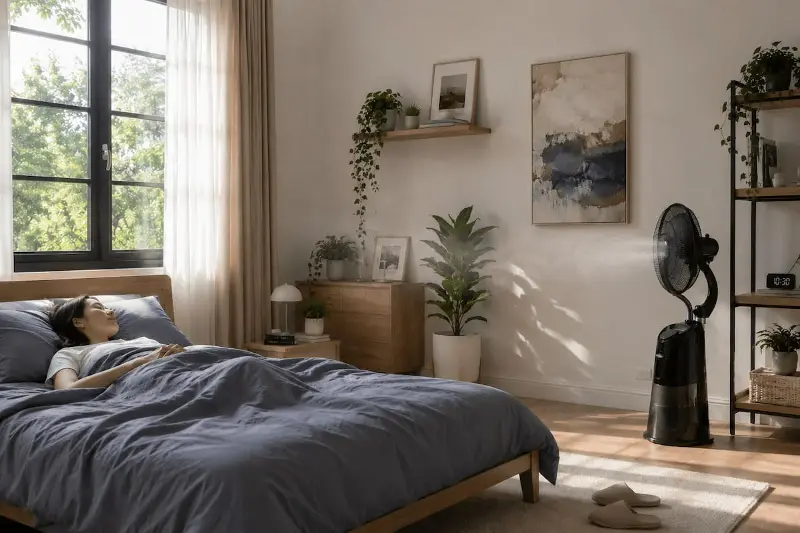
Benefits of using a misting fan
One of the biggest advantages of misting fans is their ability to create a comfortable feeling on hot, dry days. The added humidity from the device can help reduce dry skin and nasal dryness.
In addition, misting fans are generally much cheaper than air conditioners and have lower operating costs. Many current models also include features such as ion generation, dust filtration, or timer functions.
For open spaces such as patios, balconies, outdoor cafes, or areas with good air circulation, misting fans can provide a noticeable cooling effect.



Disadvantages of using misting fans in enclosed rooms.
When a misting fan operates in a closed room, the water vapor has no way to escape, leading to increased humidity and condensation. The ideal humidity for humans usually ranges from 40-60%. Exceeding this threshold, especially above 70-80%, creates favorable conditions for mold, bacteria, and dust mites to thrive.
Mold spores and dust mites are potent allergens. When inhaled, they can trigger asthma attacks, allergic rhinitis, and sinusitis in sensitive individuals.
Excessive humidity in enclosed spaces also makes it difficult for the body to sweat, causing feelings of stuffiness, discomfort, fatigue, and reduced concentration.
High humidity can damage household items. Wooden furniture is susceptible to mold, warping, and rotting. Books, newspapers, and clothing can also become damp, smelly, and moldy. Electronic devices such as televisions, computers, and phones are particularly sensitive to humidity.
In enclosed rooms, the cooling capacity of misting fans is also limited. Once the air is saturated with water vapor, the evaporation process slows down or stops completely, preventing the fan from effectively lowering the temperature. Instead, it only increases humidity, making the air stuffier and more uncomfortable, creating a feeling of "hot and humid" instead of "cool".
Using a misting fan correctly
Misting fans work best in open spaces or areas with good air circulation, such as gardens, balconies, outdoor cafes, or living rooms with large windows or doorways.



The water tank of a misting fan is an ideal breeding ground for bacteria and algae if not cleaned regularly. Make sure to thoroughly clean the tank and replace the water daily.
If you must use a misting fan in a room, make sure you have a humidity meter to monitor the humidity. When the humidity exceeds 60%, turn off the fan or open a window for ventilation. Do not leave the misting fan running continuously for many hours in a closed room.
Instead of focusing solely on immediate temperature reduction, prioritize a dry, airy, and healthy living environment. Investing in cooling solutions tailored to your space's characteristics and your family's health conditions will provide more sustainable and safer results for everyone.