


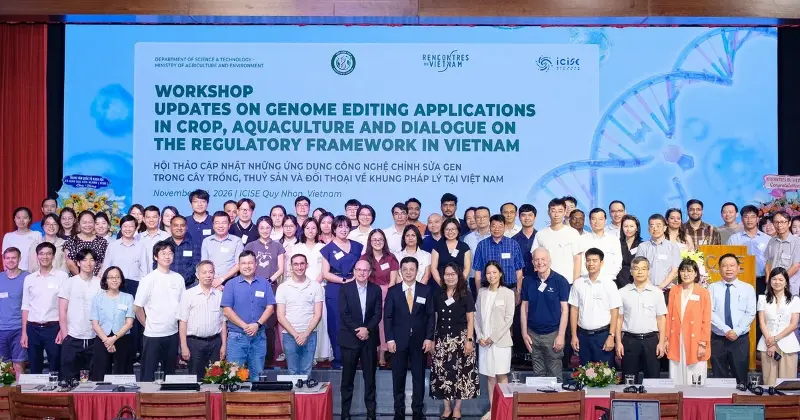
On the morning of November 4th, the Vietnam Meeting Association and the International Center for Interdisciplinary Science and Education (ICISE, in Quy Nhon Nam ward, Gia Lai province) collaborated with the Institute of Biology (Vietnam Academy of Science and Technology) to organize an international conference on trends and cutting-edge technologies in the field of genetic modification (FGE 2026).
The event brought together nearly 150 professors, scientists , young researchers, and graduate students from 15 countries. The program featured nearly 60 presentations, focusing on five main themes: CRISPR-Cas biology and alternative gene engineering mechanisms; next-generation gene editing technology; gene editing in plants; applications in therapy, cell engineering, and functional genomics; and interdisciplinary innovative applications.
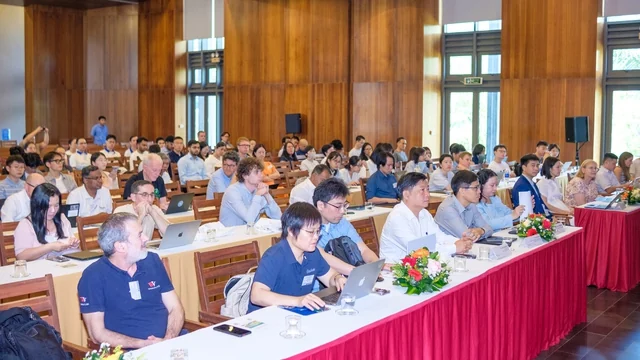
Scientists attending the international conference on cutting-edge trends and technologies in the field of genetic engineering (FGE 2026)
PHOTO: ICISE
According to the organizers, since its discovery and successful development as a research tool, the CRISPR-Cas system (a technology that allows for the identification and cutting of DNA at specific locations) has made significant progress in molecular biology, biotechnology, and biomedical science. This technology opens up the possibility of more precise intervention in genetic material, creating prospects for applications in agriculture , medicine, and many other fields.
Expanding the application of gene editing in agriculture.
Prior to the conference, on November 3rd, a pre-conference workshop was held focusing on updating the application of gene editing technology in crops and aquaculture, and a dialogue on the legal framework in Vietnam.
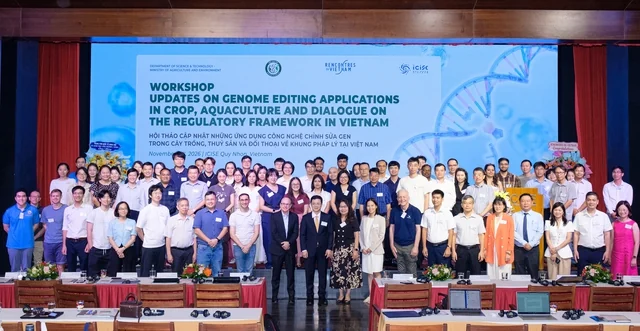
Workshop on the application of gene editing technology in plants and aquaculture.