


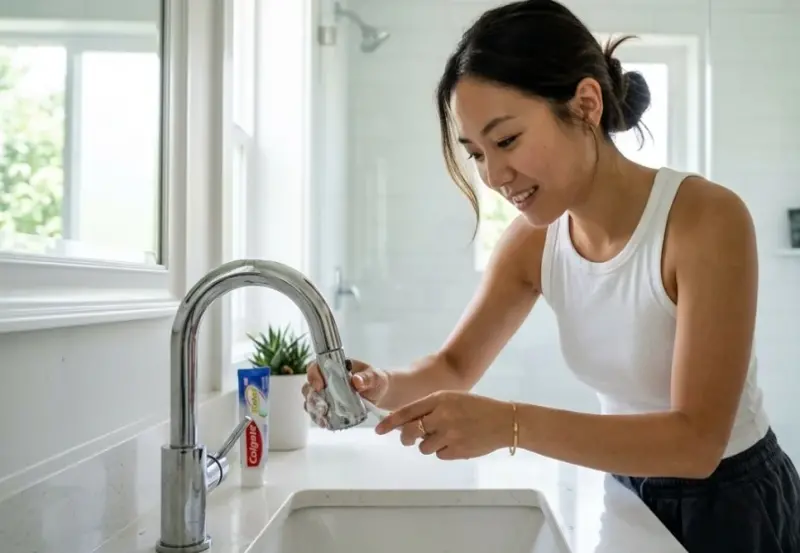
In bathrooms and kitchens, stainless steel faucets are the most frequently used fixtures. After a while, this shiny metal surface often develops speckled white spots, yellow stains, or a cloudy film.
This phenomenon originates from the evaporation of hard water. As water droplets accumulate on faucets and evaporate, they leave behind dissolved minerals, primarily calcium carbonate (CaCO3) and magnesium. Along with soap residue and grease, this limescale adheres tightly to the metal, detracting from the aesthetic appeal of the space.
Many people's natural reaction is to use strong toilet bowl cleaners or solutions containing hydrochloric acid (HCl) to remove stains instantly. However, this is a serious mistake from a material engineering standpoint. Stainless steel is protected by a very thin layer of chromium oxide on its surface. Highly corrosive industrial cleaning chemicals will destroy this protective layer.
As a result, the faucet may be clean at the moment, but after only a few days, oxidation will accelerate, the stainless steel will permanently tarnish, become pitted, or even develop irreversible rust stains.
How to clean stainless steel faucets to make them shiny without chemicals.
To solve this problem thoroughly and safely, we need to turn to natural biological solvents. Below are some methods for cleaning stainless steel faucets based on basic chemical principles, helping to restore the device's shine without damaging the material's structure.
White vinegar: Thoroughly dissolves mineral deposits.
For faucets with thick calcium deposits, white vinegar, which contains about 5-7% acetic acid, is the most effective solution. This method utilizes the mild acidity of vinegar to break down the molecular bonds of the inorganic plaque.
When acetic acid comes into contact with calcium carbonate, a chemical reaction occurs, transforming the hardened scale into water-soluble calcium salts and releasing CO2 gas. This process is gentle, completely removing the deposits without scratching the metal.
Perform:
- Dilute white vinegar with warm water in a 1:1 ratio.
- Dip a soft cloth or cotton pads into this solution.
- Wrap a towel/cotton pad tightly around the areas of the faucet where limescale has accumulated (usually the base and nozzle).
- Leave it in this "incubating" state for about 30 to 45 minutes to allow the acid time to penetrate and dissolve the mineral deposits.
Finally, remove the cloth, gently scrub with an old, soft-bristled toothbrush, and then rinse with clean water.
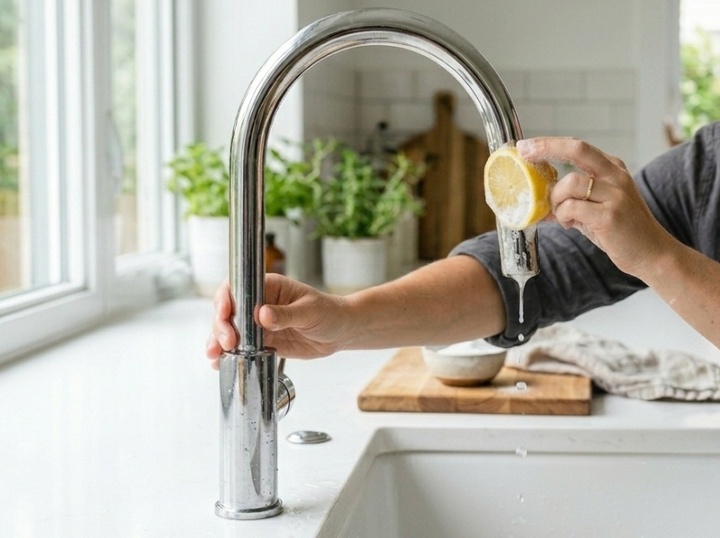
Lemon and baking soda can quickly clean stainless steel faucets. Photo: IT
Fresh lemon and baking soda: A peeling and polishing reaction.
While white vinegar is great for removing limescale, the combination of fresh lemon and baking soda is the perfect solution for removing greasy soap residue and polishing surfaces. Baking soda is a mildly alkaline compound that acts as a superfine micro-abrasive. When combined with the abundant citric acid in fresh lemon, they create a powerful effervescence. This effervescence generates a physical force at the molecular level, dislodging grease and soap residue from metal surfaces.
Perform:
- Cut a fresh lemon in half.
- Sprinkle a sufficient amount of baking soda directly onto the cut half of the lemon.
- Use half of this lemon to rub directly onto the entire faucet body. Rub in a circular motion so that the baking soda particles can gently polish and abrade it.
- Leave the mixture on the tap for about 10 minutes; the essential oils from the lemon peel will leave a refreshing aroma. Then, rinse thoroughly with warm water.
Toothpaste: Micro-abrasive particles
In case you need to quickly clean your stainless steel faucet daily and don't have vinegar or baking soda available, toothpaste (regular toothpaste, not the clear gel) is an excellent metal polish.
Toothpaste contains ultrafine silica particles that act as abrasives against plaque on teeth. When applied to stainless steel, these particles gently scrape away the dull, oxidized layer on the metal surface without being hard enough to scratch chrome plating or stainless steel.
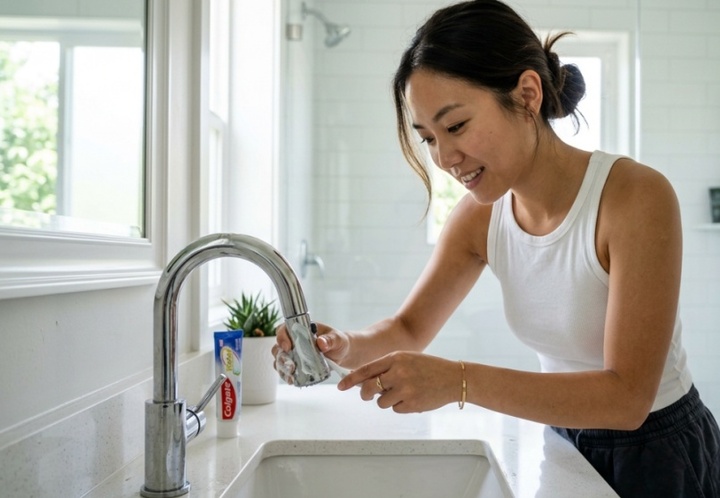
Toothpaste is very effective at cleaning and polishing metal. Photo: WKH
Perform:
Apply a thin layer of toothpaste to the faucet. Use a damp sponge or soft cloth to rub it evenly. Rinse with clean water, and you'll be amazed at the sparkling shine this simple method provides.
Notes on cleaning stainless steel faucets
Cleaning is only truly complete when you understand the physics of preventing the natural evaporation of water from metal surfaces. Regardless of the method you use, the crucial step after rinsing with water is to dry the surface immediately.
Use a microfiber towel that effectively absorbs all water molecules and traps even the tiniest dust particles without leaving lint or scratches.
When no water droplets are left to evaporate, mineral deposits have no chance to form. Making it a habit to wipe down your faucet with a microfiber cloth after each use at the end of the day only takes about 5 seconds, but it's the most scientifically sound maintenance method to keep your stainless steel faucet looking shiny and new for decades.