


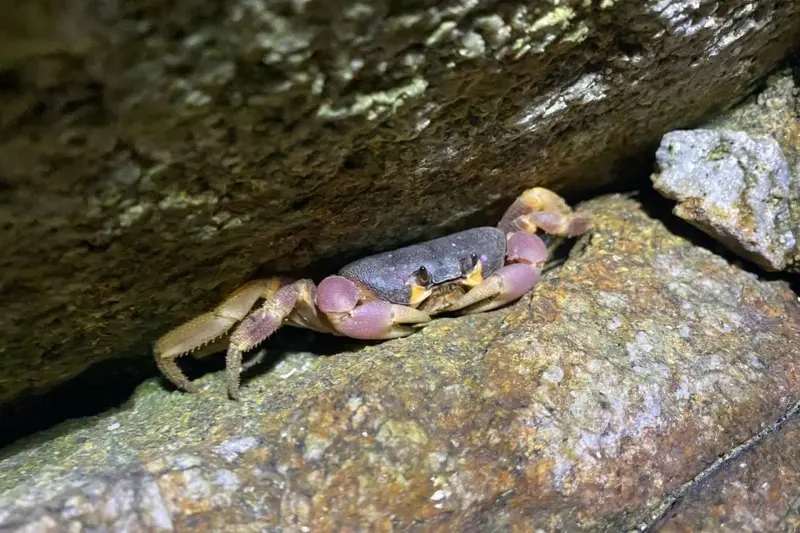
During the permitted harvesting season, the stone crabs of Cu Lao Cham must have a shell size of 7cm or more to be caught. Photo: Cu Lao Cham Nature Reserve - Da Nang .
Starting on August 1st each year, the rock crab of Cu Lao Cham (Gecarcoidea lalandii) enters its breeding season. This is the time when adult individuals migrate from the forest to the coastal tidal zone to lay eggs, contributing to the regeneration of the population in the wild.
According to the Regulations on the Management of Cu Lao Cham Nature Reserve issued with Decision No. 63/2026/QD-UBND of the People's Committee of Da Nang City, the harvesting of rock crabs is only permitted from March 1st to July 31st each year. From August 1st to February 28th of the following year, all activities related to the harvesting, purchasing, transportation, and consumption of rock crabs within the reserve must be temporarily suspended.
The Management Board of Cu Lao Cham Nature Reserve stated that the temporary suspension of exploitation aims to create conditions for the rock crabs to breed, recover, and develop their population, contributing to the conservation of biodiversity in the biosphere reserve.
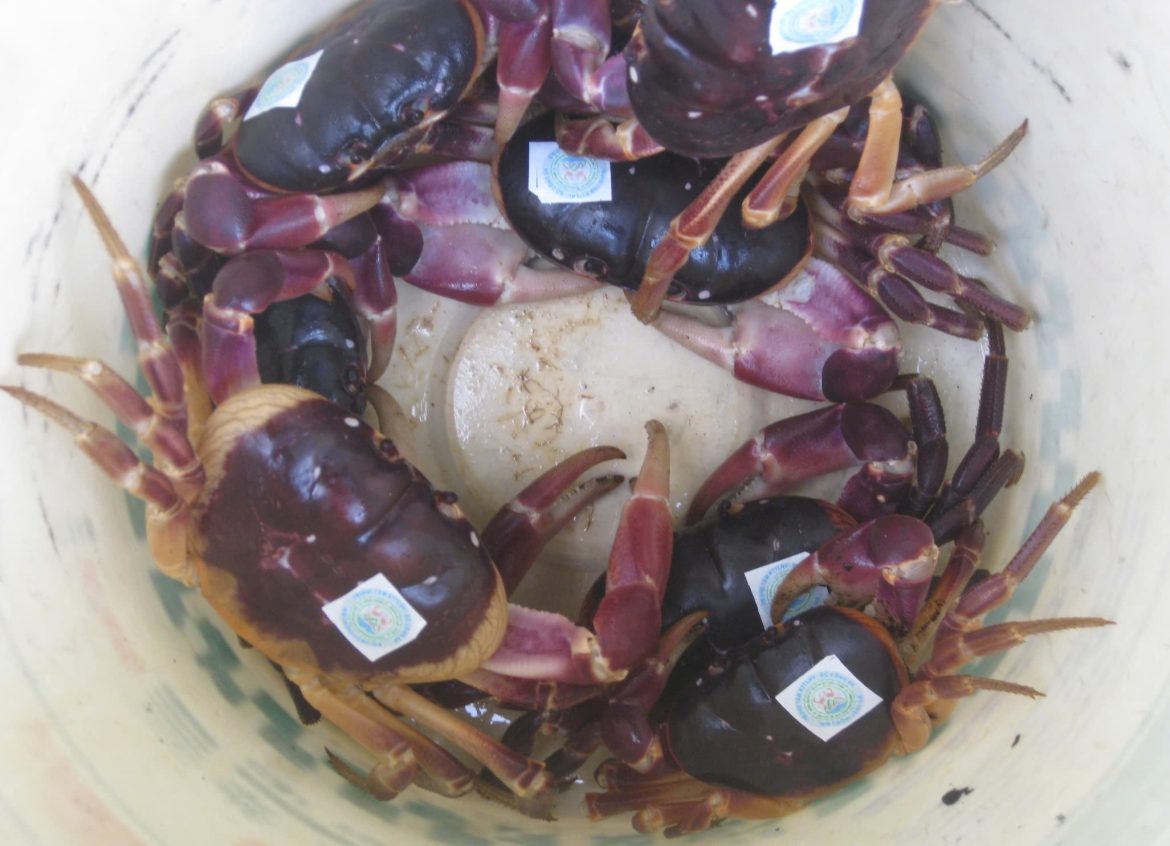
Stone crabs are given eco-labels. Photo: Cu Lao Cham Nature Reserve - Da Nang.
The unit also requested that residents, tourists, businesses, and organizations and individuals strictly comply with the regulations; and refrain from harvesting, purchasing, or consuming stone crabs during the prohibited period.
Not only is it a famous local delicacy, but the rock crab is also considered a representative animal of the unique ecosystem of Cu Lao Cham. They live in the forest but migrate to the coast to lay their eggs during the breeding season, creating a natural link between the forest and marine ecosystems.
Over the years, the conservation of rock crabs has been implemented with the participation of the local community through various activities such as managing harvesting quotas, monitoring crab size, eco-labeling, public awareness campaigns, and scientific research. This model is considered to contribute to balancing the conservation of natural resources and the development of livelihoods for people on the island.
Stone crab has long been a popular dish among tourists visiting Cu Lao Cham. However, from the beginning of August until the end of February the following year, restaurants and legally operating businesses on the island will not serve this delicacy due to regulations temporarily suspending its harvesting.
According to the Cu Lao Cham Nature Reserve Management Board, refraining from consuming stone crabs during the breeding season is also a way for tourists to contribute to protecting the island's ecosystem. Illegal exploitation or trading of stone crabs can directly impact conservation efforts and the recovery of the species' population.