



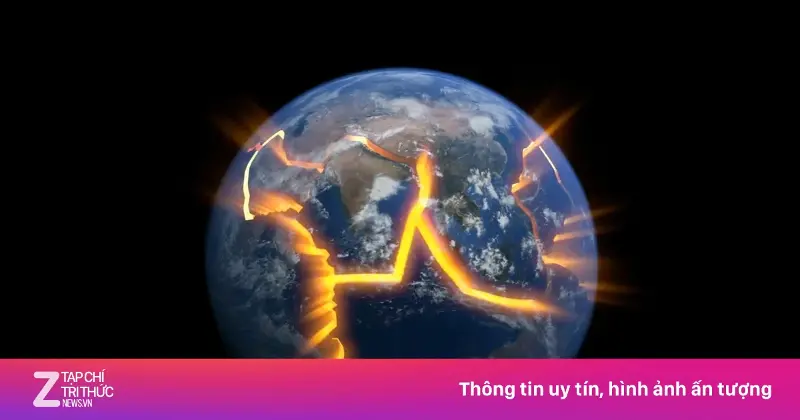
In the Kafue Rift Valley region of Zambia, scientists have discovered helium isotopes bubbling through geothermal hot springs that appear to originate deep within the Earth's mantle, an early sign of ongoing tectonic faulting.
"The hot springs along Zambia's Kafue fault zone exhibit helium isotope characteristics, indicating a direct connection to the Earth's mantle, located approximately 40-160 km below the surface," said geologist Mike Daly of Oxford University.
This could be seen as a potential sign that a new tectonic plate boundary is forming. In other words, the Earth's crust on which Zambia lies is splitting in two.
Africa will be torn apart.
Hundreds of millions of years ago, the world looked very different from today. The continents were once bound together into a supercontinent called Pangea, which then broke apart into many landmasses that drifted apart as Earth's tectonic plates rearranged beneath them.
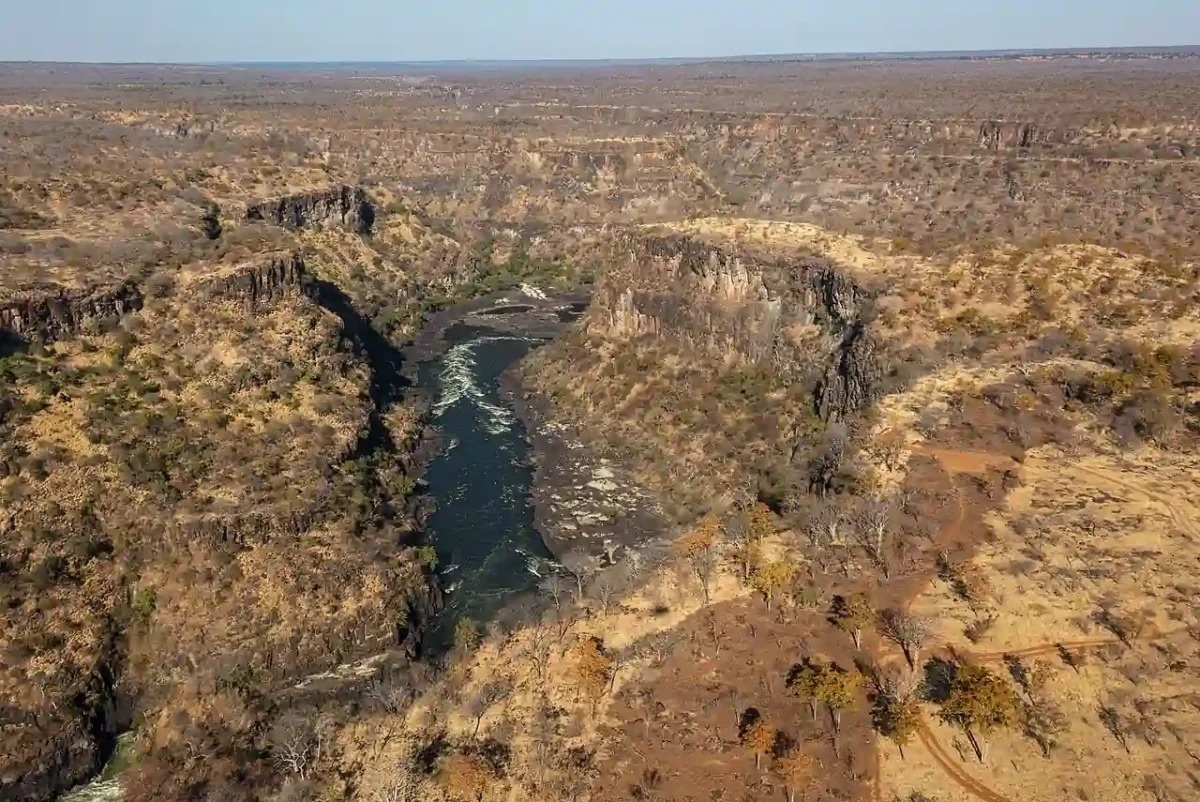
The Zambeze River flows parallel to the Kafue fissure, where the Earth's crust is rising to the surface. Photo: Wikimedia Commons.
One of the processes that contributed to shaping the habitable world we see today is tectonic activity.
The movement of tectonic plates recycles minerals across the crust, disrupts continents and oceans, fuels volcanic and geothermal activity, and helps regulate the long-term carbon cycle between the planet's core, oceans, atmosphere, and living organisms.
In particular, the African continent has long been known as a "hotspot" for faults. From the Afar Depression bordering the Red Sea, running along the eastern coast of the continent, is the East African Fault Zone, where the Somali tectonic plate is gradually separating from the African tectonic plate.
The Kafue Fault is part of a 2,500-kilometer-long fault system that cuts diagonally across central Africa and may eventually connect to the Mid-Atlantic Ridge – the boundary where the African tectonic plate meets the South American tectonic plate.
In fact, scientists once suspected that this area might mark the beginning of a new tectonic plate boundary when the African plate split in two, but there was a lack of concrete evidence until now.
"A fault is a large crack in the Earth's crust that causes subsidence and accompanying elastic uplift. A fault zone can become a tectonic plate boundary, but typically, fault activity ceases before reaching the point of lithosphere rupture and tectonic plate boundary formation," Daly further explained.
The breakdown process is complex.
Under the leadership of geologist Rūta Karolytė from Oxford University, the research team collected samples of bubbling gas flowing through hot springs in Zambia, including six samples inside the Kafue fissure area and two samples outside its boundaries.
They were looking for unusual isotope ratios that suggested a mantle origin and indeed found compelling evidence. Specifically, in hot springs in the fault zone, the research team discovered helium isotopes which they believe indicate the transport of fluids from very deep beneath the Earth's crust.
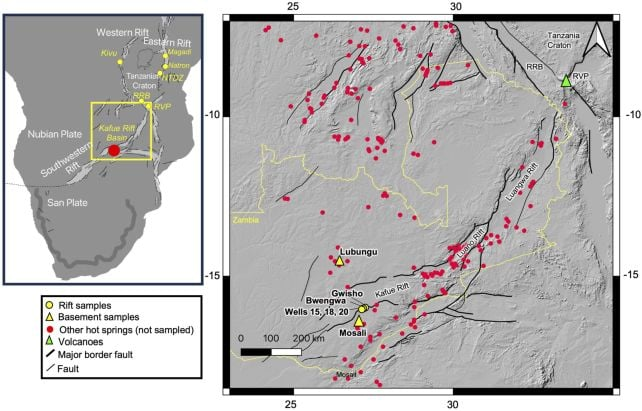
Map showing the Kafue Rift in Zambia. Photo: ScienceAlert.
In addition to the unusual helium isotopes, the research team also discovered fainter traces of carbon dioxide (CO2) originating from the coating.
In highly developed fault systems, CO2 tends to become more abundant as mantle activity increases. Conversely, samples taken from outside the fault zone only reveal characteristics of the Earth's surface crust.
"The data obtained are entirely consistent with the early stages of active lithospheric fracturing, which is also corroborated by previous global geophysical observations," the research team wrote in the scientific paper.
If the formation of a tectonic boundary is beginning to take place in central Africa, the process will be very slow. The research team predicts it could take millions of years.
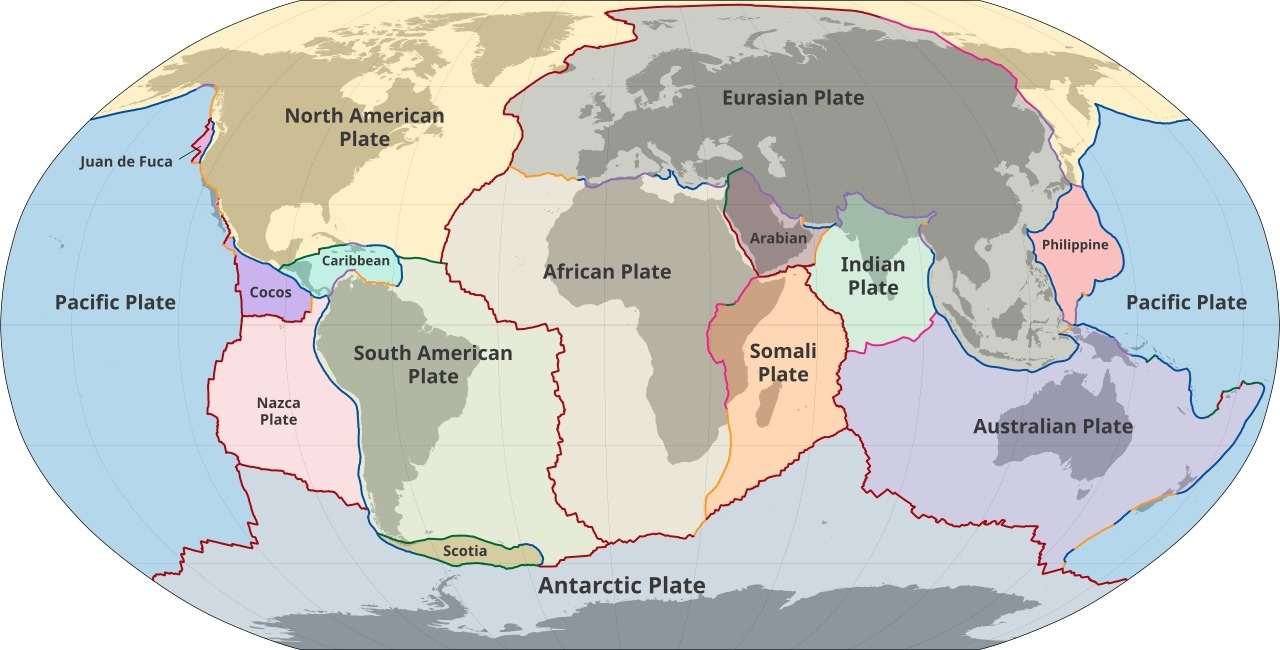
Map showing the current tectonic plate configuration of Earth. Image: Wikimedia Commons.
Specifically, the split will occur along the Kafue fissure, part of a fault line approximately 2,500 km long stretching from Tanzania to Namibia.
“It could happen in a few million years at the fastest. It could take 10-20 million years at the slowest. The southern part of Africa will break apart, but before that, you’ll start seeing more earthquakes, and some volcanic activity with lava eruptions. You’ll start seeing deep fissures, and water will start to collect in them, so there will be lakes like those in East Africa today and eventually there will be seas,” Daly said.
However, this process could also unlock a wealth of potential resources for exploitation, such as geothermal energy, or hydrogen and helium gas.
Zambia will benefit economically from energy exploitation, with geothermal plants under construction in the region. The landlocked nation could even harvest helium, a gas in high demand with numerous applications in medicine and technology.