


Lack of water or improper irrigation
Pothos plants need consistent moisture to survive. When the plant doesn't receive enough water, especially in hot, dry weather, the cells at the edges of the leaves – where water evaporates most quickly – will dehydrate and wither.
Conversely, overwatering can also be harmful. Waterlogged soil prevents plant roots from absorbing oxygen, leading to root rot and reducing their ability to absorb water and nutrients, causing symptoms similar to water shortage.
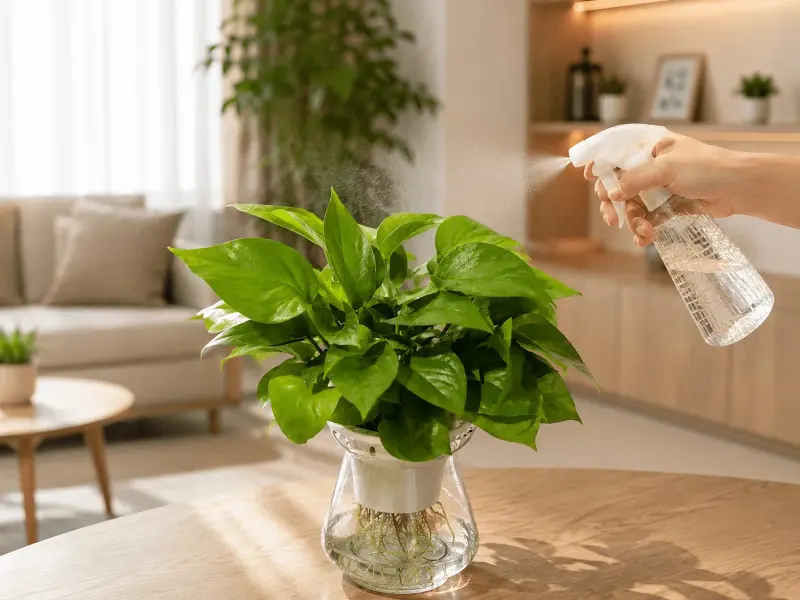
Low air humidity
Pothos is a tropical plant that prefers high humidity. In excessively dry conditions, such as when using air conditioning frequently or during the dry winter months, the water vapor from the leaves evaporates faster than the roots can supply. This causes the edges of the leaves, which have a large surface area exposed to the air, to dry out and burn.
Exposure to intense sunlight
Although pothos needs light for photosynthesis, direct sunlight, especially the intense midday sun in summer, can burn the leaves. Strong UV rays damage leaf cells, causing them to scorch, particularly at the delicate edges. Pothos thrives in indirect or low-light conditions.
Excess fertilizer or mineral salt accumulation
Over-fertilization or failure to flush regularly can lead to the accumulation of mineral salts in the soil. High salt concentrations in the soil draw water away from the plant roots (reverse osmosis), preventing the roots from absorbing water and nutrients. This causes leaf burn, usually starting at the edges of the leaf and spreading inward.
Sudden temperature shock
Pothos plants are quite sensitive to sudden temperature changes. Rapid temperature fluctuations disrupt the plant's metabolism and water absorption, leading to symptoms such as leaf burn.
The quality of irrigation water is unsuitable.
Tap water containing chlorine, fluoride, or other chemicals can harm pothos plants if used long-term. These substances can accumulate in the soil and poison the roots, reducing their ability to absorb water and nutrients, leading to leaf burn. Water with a pH that is too high or too low can also negatively affect the plant.
Pests and diseases (less common)
Although less common than the causes mentioned above, some pests and diseases such as red spider mites or fungal diseases can also cause symptoms similar to leaf margin burn. They attack and weaken the plant, affecting its ability to absorb and transport water and nutrients.
Proper care of the pothos plant, especially addressing issues like leaf burn promptly, not only helps the plant maintain its inherent beauty but also ensures its feng shui significance is maximized. A healthy, vibrant pothos plant symbolizes prosperity, good fortune, and wealth, contributing to a harmonious and peaceful living space for your family.