



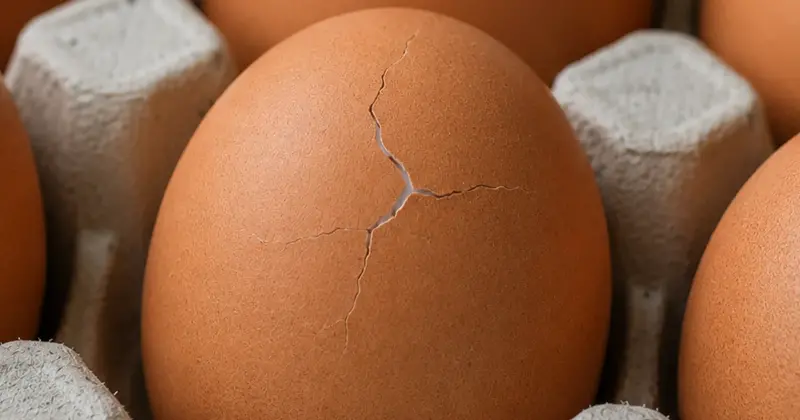
- Eggs that have been cracked for a long time, are leaking, or have a strange smell should be discarded immediately.
- Newly cracked eggs can still be used if properly refrigerated.
- Experts recommend always cooking food thoroughly to reduce the risk of bacterial infection.
When chickens lay eggs, Salmonella bacteria from their droppings can stick to the eggshells. If not stored or handled properly, the bacteria can penetrate the inside, according to the health website Healthline (USA).
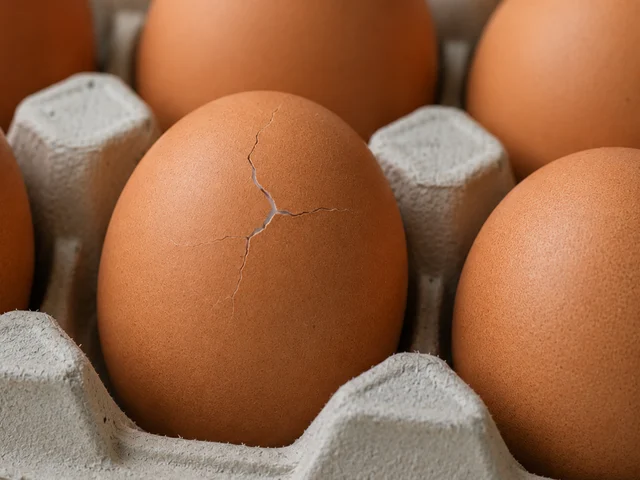
If an egg has just cracked, the risk of infection will be lower than with an egg that has been cracked for a while.
PHOTO: N. Quy created using AI
Eggshells act as a barrier preventing bacteria from entering.
Salmonella is a bacterium that can cause food poisoning with symptoms such as abdominal pain, diarrhea, fever, nausea, or vomiting. In the elderly, young children, or those with weakened immune systems, the condition can be more severe.
Eggshells are important because they not only protect the yolk and egg white from impact but also act as a barrier preventing bacteria from entering. Beneath the hard shell is a thin membrane that helps limit microorganisms from getting inside.
When the shell cracks, the risk of bacteria from the external environment entering the egg increases significantly. The extent of penetration will depend on when the crack occurs, the severity of the crack, and how the egg is stored afterward.

Photo: PH created using Gemini
You shouldn't buy egg cartons with cracked shells.
The U.S. Department of Agriculture (USDA) advises against buying cracked egg cartons. This is because buyers don't know when the crack appeared or how long the egg has been exposed to the outside environment. If the crack occurred during shipping or storage in the store, bacteria may have already entered the egg.
In particular, eggs that show signs of leaking egg white, wateriness, or an unusual odor should be discarded immediately. This indicates that the protective membrane inside has been damaged, increasing the risk of bacterial contamination.
Newly cracked eggs, without any strange odor, can be used.
The U.S. Food and Drug Administration (FDA) also noted that eggs sold in stores need to be kept refrigerated at the correct temperature to minimize food safety risks.
Eggs that crack while being brought home or accidentally dropped in the kitchen are different from eggs that were already cracked at the supermarket. If the crack is new, the egg doesn't have a strange smell, and it hasn't leaked too much, it can still be used if handled properly, says food safety expert Vanessa Coffman, director of the Alliance to Stop Foodborne Illness (USA).
In that case, crack the eggs into a clean, airtight container and store them in the refrigerator, using them as soon as possible. Ideally, within 1-2 days. It's important to cook them thoroughly before eating, meaning until both the yolk and the white are completely set, according to Healthline .