



NASA's Artemis II flight marked several historical milestones, from the record for the furthest distance traveled by humans to the preparations for a mission to return to the Moon.
More than half a century after the Apollo missions, humanity is once again closer to its goal of returning to the Moon. NASA's Artemis II mission has just completed a flyby of the Moon with many historical milestones, while also setting a series of new records in human space exploration.
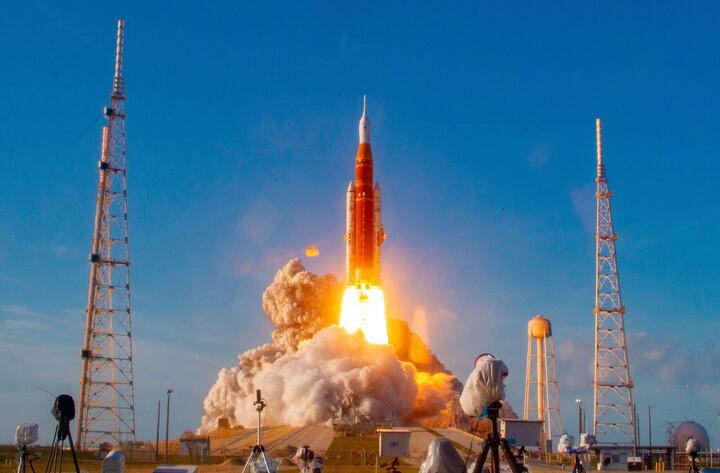
Farthest flight in the history of manned travel.
One of Artemis II's most significant milestones was its record-breaking distance. During its flyby of the Moon, the Orion spacecraft carried the crew to a distance of approximately 252,700 miles (over 406,000 km) from Earth.
This number surpasses the previous record set by the Apollo 13 mission in 1970. As a result, the four astronauts on Artemis II became the furthest people to have ever flown from their home planet in history.
This record is not only symbolic but also demonstrates the capabilities of the Space Launch System rocket and Orion spacecraft in operating safely in deep space – an environment that future missions to the Moon or Mars will face.
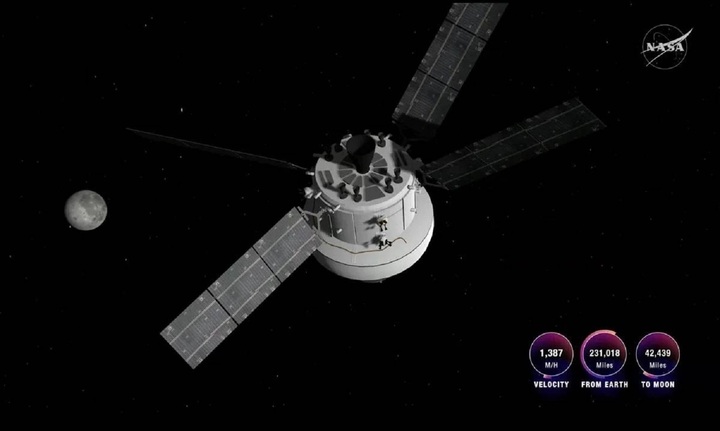
The first crewed flight around the Moon in over 50 years.
Artemis II also marked the first time in over half a century that humans had returned to the vicinity of the Moon. Since the last Apollo mission in the 1970s, no crewed flight had made a similar journey.
During its approximately 10-day flight, the Orion spacecraft orbited the Moon in a "free-return" orbit. This orbit allowed the spacecraft to use the Moon's gravity to automatically return to Earth if no major incident occurred, ensuring a higher level of safety for the crew.
During its flyby behind the Moon, the Orion spacecraft also experienced about 40 minutes of lost contact with Earth – a phenomenon that was predictable because radio signals would be obscured by the massive mass of the celestial body.
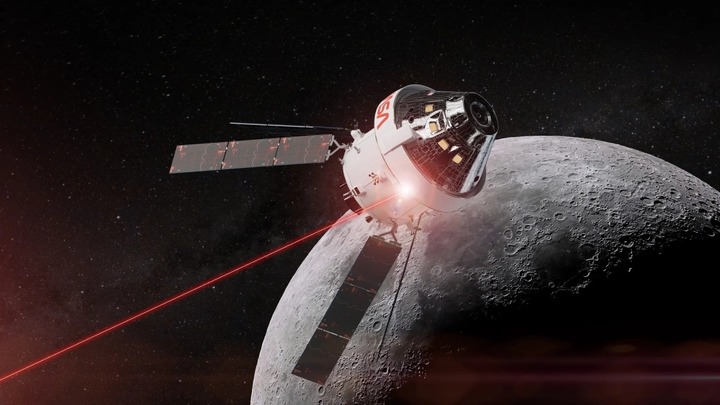
Many historical milestones for the crew.
The Artemis II crew also set several notable milestones in the history of space travel.
Victor J. Glover became the first person of color to participate in a crewed flight to the vicinity of the Moon. Meanwhile, Christina Koch was the first woman to make this journey.
Furthermore, Jeremy Hansen also became the first non-American citizen to fly to the Moon, marking a step forward in international cooperation in the field of space exploration.
These milestones demonstrate that the Artemis program is not only aimed at returning humans to the Moon but also at fostering diversity and global cooperation in space exploration missions.

Collecting crucial data for future missions.
In addition to setting a record, Artemis II also served as a crucial test flight before humans returned to the surface of the Moon.
Throughout the journey, the crew conducted numerous experiments related to life support systems, Orion spacecraft control, and deep space operational procedures. The astronauts also captured thousands of photographs of the lunar surface, providing additional data for the scientific community.
The information gathered from Artemis II will help NASA refine the technology and processes for subsequent missions, especially the Artemis III mission – the plan to return humans to the Moon in the coming years.
With a series of new records and crucial data obtained, Artemis II is seen as a vital stepping stone to a new phase of space exploration, where humans will not only return to the Moon but also aim for even more distant goals in the Solar System.