




Yogurt is made from milk, so it contains many important nutrients for children's physical development, especially calcium, protein, phosphorus, and vitamin B12, according to the health website Healthline (USA).
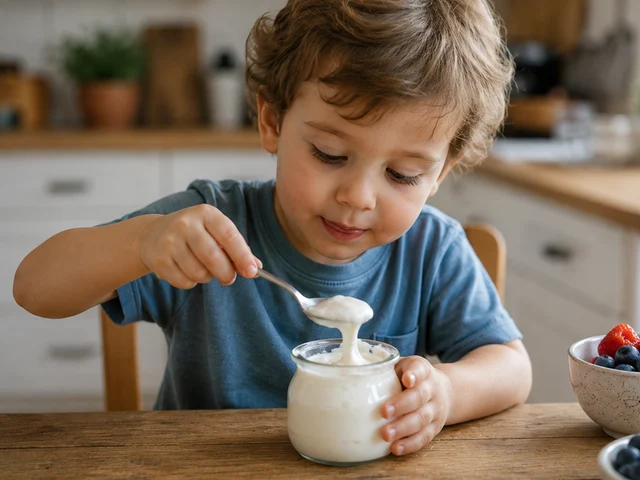
Children can absolutely eat yogurt every day, but in moderation.
PHOTO: N. Quy created using AI
Calcium and phosphorus are essential for bone and tooth formation, while protein is crucial for muscles and tissues in the body. Vitamin B12 is involved in the functioning of the nervous system and blood formation.
For children under 2 years old, foods made with whole milk should be prioritized.
The UK National Health Service (NHS) states that children aged 1 year and older can drink cow's milk and eat dairy products such as cheese and yogurt. The NHS also recommends that children under 2 years old should prioritize whole milk products, including yogurt, over low-fat options. This is because fat provides the energy necessary for brain development and physical growth in the early years of life.
Note the sugar content in yogurt.
One easily overlooked issue is that children can consume too much sugar from yogurt. Many fruit-flavored yogurts and yogurt drinks can contain a significant amount of sugar to enhance the flavor. If children eat these products regularly, their daily sugar intake can be quite high.
Children who consume too much sugar are at increased risk of cavities and may develop a preference for sweets from an early age. Therefore, if parents want to give their children yogurt daily, they should prioritize sugar-free or low-sugar products instead of those with strong, sweet flavors.
It should only play a supplementary role in the overall diet.
There's no rule that says children must eat yogurt every day for it to be healthy. If children enjoy it and don't have digestive problems, a small serving a day or a few times a week is usually sufficient.
More importantly, yogurt should only play a supplementary role in the overall diet. If children eat a lot of yogurt but have few vegetables, fruits, or other sources of protein, their diet will still be unbalanced.
Read the ingredients list carefully.
When buying yogurt for children, parents should carefully read the ingredient list. Suitable options usually have a simple ingredient list, little added sugar, and do not contain too many artificial flavors.
Parents can give children plain yogurt combined with fresh fruit like bananas, strawberries, or mangoes to add natural sweetness. This helps children avoid consuming too much refined sugar. This is often a more sensible choice than processed yogurts with overly sweet flavors, according to Healthline .