


A research team – led by nuclear astrophysicist Dr. Dominik Koll from the Helmholtz Centre Dresden-Rossendorf (Germany) – has just announced the discovery of rare iron isotopes in Antarctic ice, revealing a recent trajectory of Earth.
According to the authors, Earth, as well as the solar system it inhabits, does not stand still in the universe but is constantly moving as part of a "galactic dance."
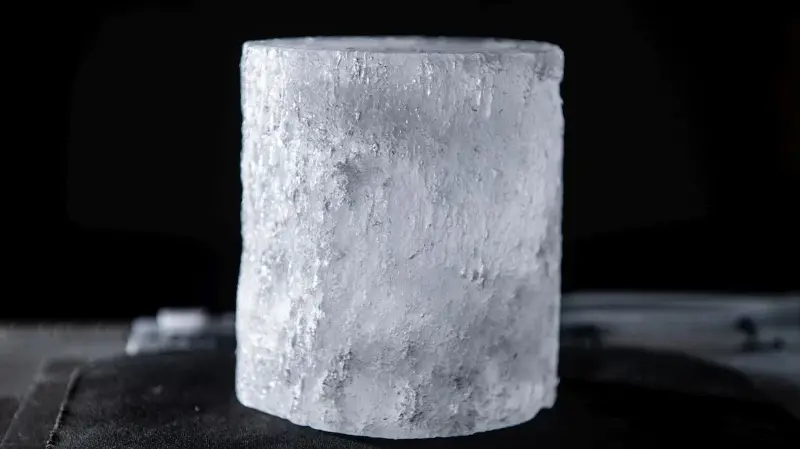
The Antarctic ice core has revealed details about Earth's journey through space and the solar system - Photo: Alfred Wegener Institute
Throughout its journey, Earth has been constantly exposed to unusual isotopes from its surroundings. Therefore, these isotopes—preserved by layers of ice in the frigid polar regions—can reveal details about its travels.
In 2019, Dr. Koll and his colleagues examined freshly fallen snow in Antarctica and found small amounts of an iron isotope called iron-60, nicknamed "meteorite iron," which can only form under extreme conditions not found on Earth.
Now, they have found frozen iron-60 in ice cores dating back between 40,000 and 81,000 years.
The concentration of iron-60 in ice layers dating back tens of thousands of years is significantly lower than the concentration in snow from recent decades.
The Solar System is currently moving through a region called the Local Interstellar Cloud, which may have formed from supernova activity. Therefore, there is reason to believe that this cloud is the source of iron-60 in Antarctic ice.
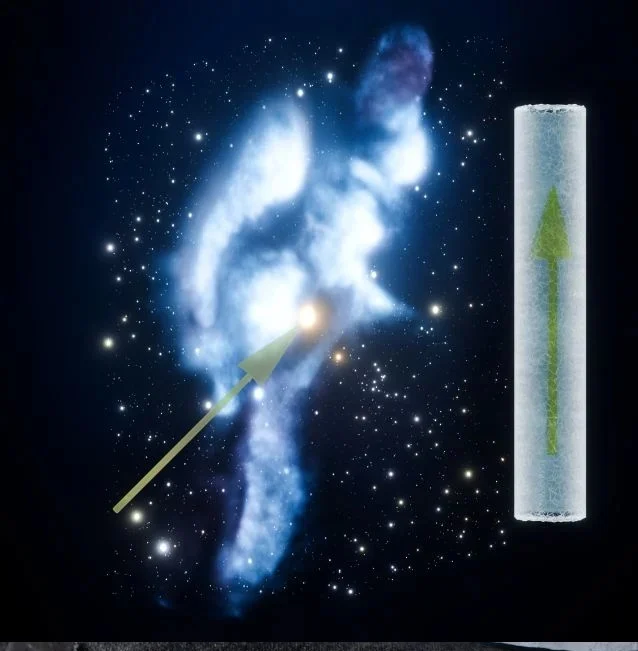
The cloud of gas and dust that Earth and the entire solar system are moving through - Photo: B. Schröder/HZDR/NASA Goddard
Data from ice cores provides evidence that the solar system may have been moving through this cloud for at least 80,000 years, first traversing a sparser region before entering the denser one we still travel through today.
"The time signature of iron-60 is evidence that the local interstellar environment has changed over the past 80,000 years," the authors said.
This study was recently published in the scientific journal Physical Review Letters.