


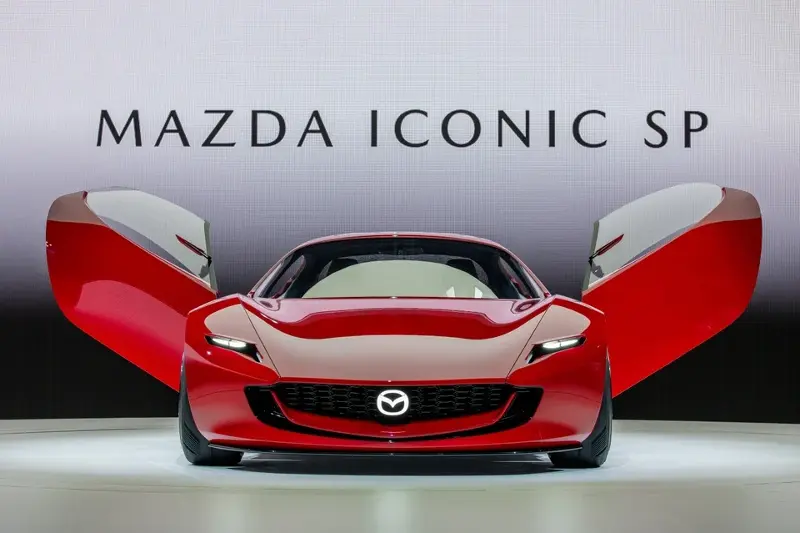
According to Carscoops , a pair of recently filed patents by Mazda have gone viral on the internet and attracted attention, even though no specific vehicle models are mentioned.
Current information only indicates that this is a small convertible model, with a front-engine configuration, rear-wheel drive, and butterfly doors. Carscoops suggests these elements point to only two models: the Mazda MX-5 and the Iconic SP concept.
Mazda has previously made no secret of the ongoing development of a completely new generation MX-5. This model is expected to maintain the lightweight, purely gasoline-powered design philosophy that has become its hallmark. Mazda also stated that it will commercialize the Iconic SP concept, indicating that Mazda's driver-focused models will not be discontinued.
The CarBuzz website was the first to discover these registrations, revealing a convertible model with a longitudinally mounted four-cylinder engine. The documents focus on the hinged pillar of an unnamed model, illustrating how a front-engine, rear-wheel-drive vehicle could be fitted with butterfly-style doors.
The patent filing also outlines how Mazda engineers have positioned the A-pillars closer to the shock absorbers to maximize chassis rigidity. The Japanese automaker has never equipped butterfly doors on any of its commercial vehicles, but appears to be serious about realizing this design.
The document describes this mechanism as a side door that flips up, with the rear section extending outward and upwards, similar to a scissor or butterfly-style door.
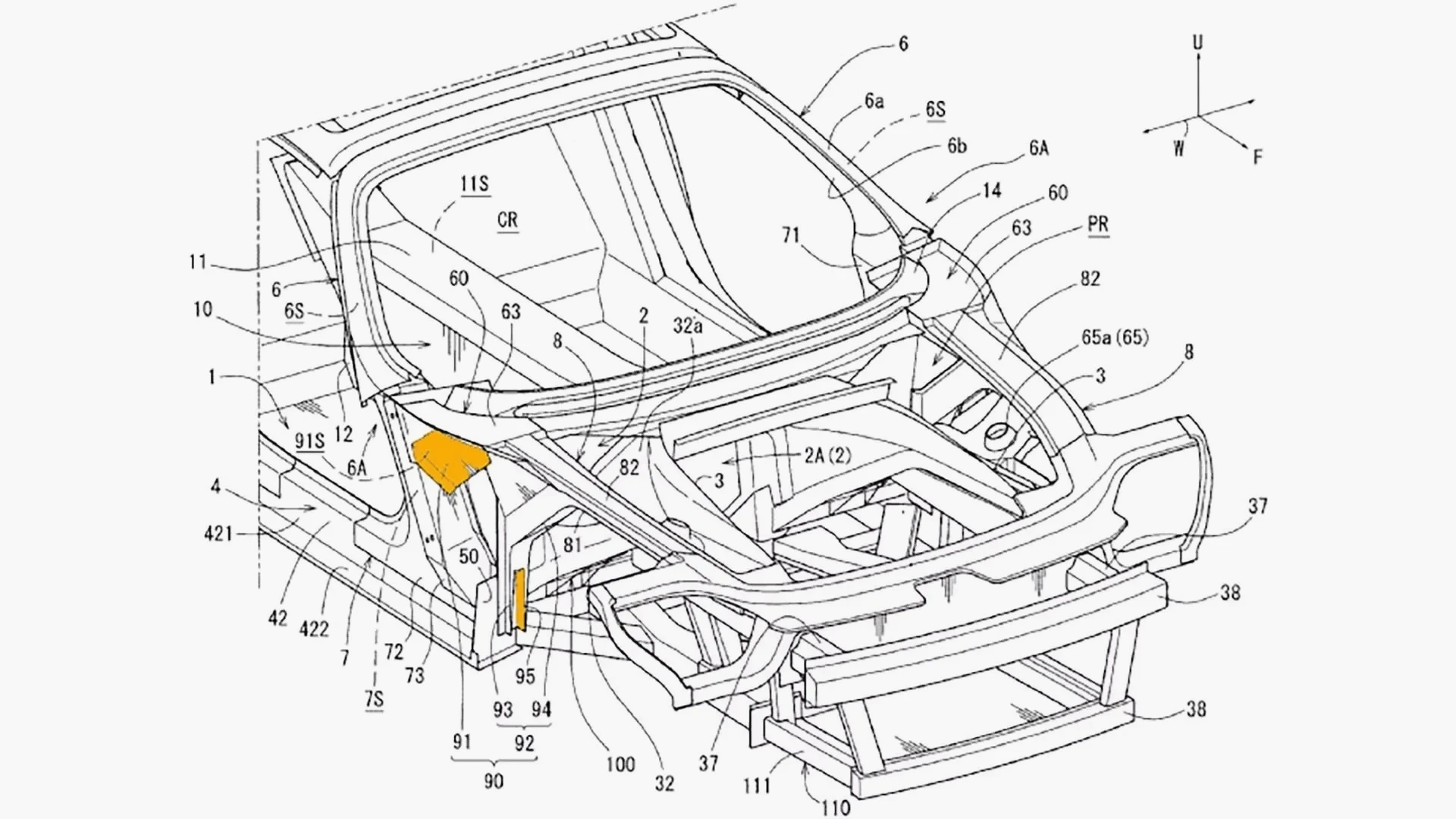
Images in the registration filing suggest that Mazda may equip a future sports car model with butterfly doors. Photo: Mazda.
The documentation also highlights the possibility of adding load-bearing struts, which would transfer loads from the suspension support to the reinforcing column – a detail that Carscoops suggests could allow these types of hinges to function on a convertible. Another detail, called an “apron frame,” is said to improve rigidity without significantly increasing vehicle weight.
Mazda's second patent describes the vehicle's crash-resistant structure, how external forces acting on this structure transfer crash loads through the engine compartment bulkhead, side skirts, and towards the rear to better protect passengers.
These drawings depict an engine block that closely resembles a longitudinally mounted four-cylinder, along with a rather traditional "gearbox tunnel." Neither of these details appeared on the Iconic SP concept – which was previously presented as a vehicle using a rotary engine as a generator to power the EREV setup.
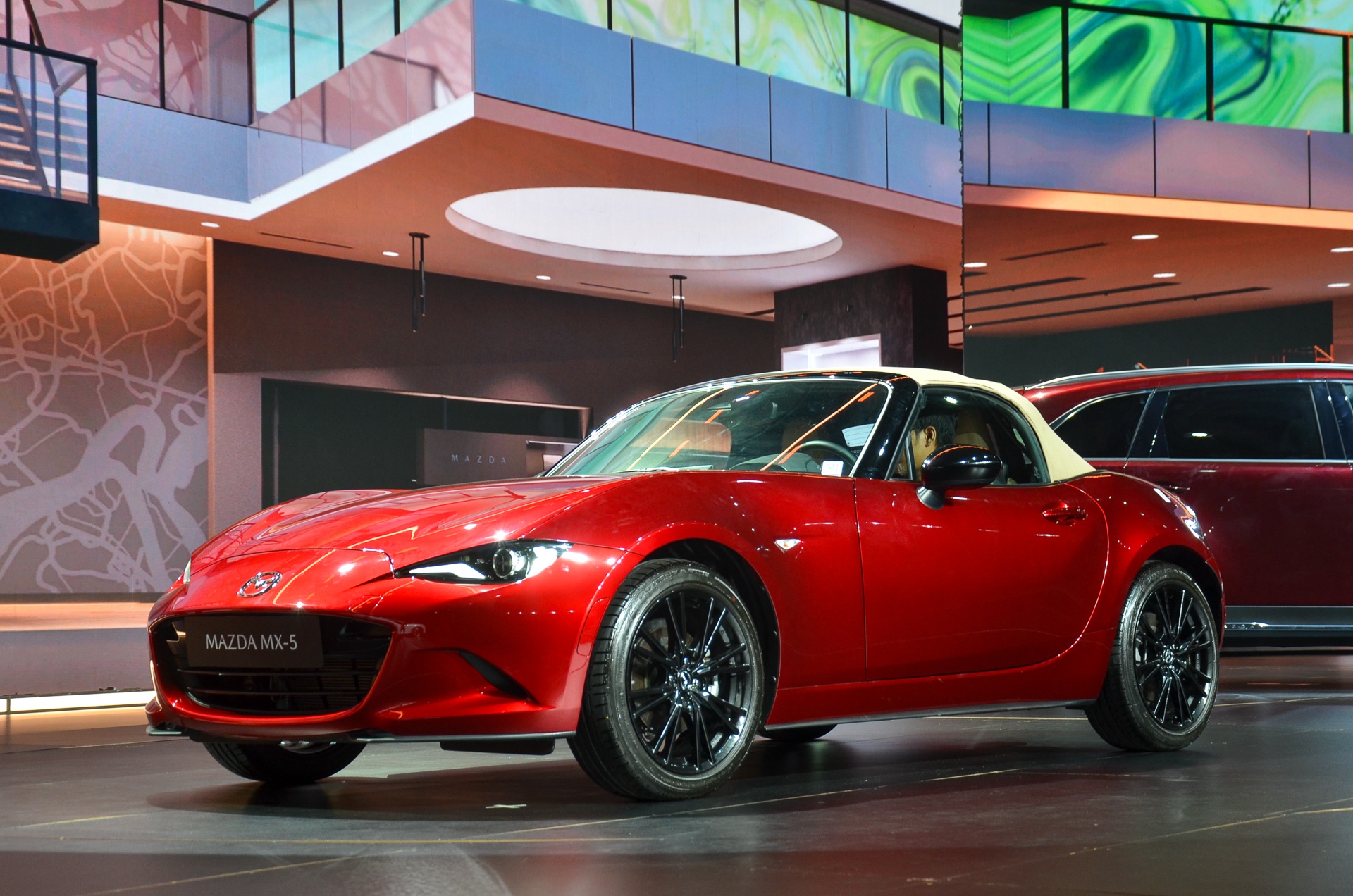
The Mazda MX-5 is currently undergoing development for its next generation. Photo: Phuc Hau.
In summary, Carscoops suggests that Mazda's two patents either target fundamental changes to the next-generation Mazda MX-5 or commercialize the Iconic SP with a four-cylinder engine.
However, the Mazda MX-5 is generally known for its lightweight design and affordability, so a new, elaborate door style is highly unlikely.
There's also a smaller possibility that Mazda is developing a platform to accommodate both models. In this case, what the patent filing is revealing is actually a common underlying chassis platform, not a detail specific to any particular model.