


The location of the bathroom significantly impacts the convenience, hygiene, and overall value of the home. Therefore, when designing or buying a house, homeowners should avoid placing the bathroom in unsuitable locations to minimize inconvenience during use and optimize the functionality of the living space.
The bathroom is in the center of the house.
The center of the house is usually the area connecting the main living spaces such as the living room, dining room, or hallway. If the bathroom is located in this position, ventilation and humidity control will be more difficult, easily creating a stuffy feeling and affecting the indoor environment.
In addition, centralized water supply and drainage systems in the middle of the house often make construction and maintenance more complex and costly.
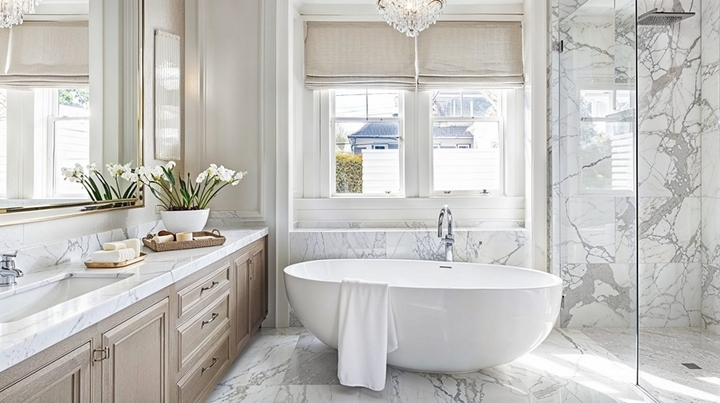
Bathrooms should not be located in the center of the house. (Image: Homedit)
Therefore, architects often prioritize placing bathrooms against the exterior wall or near the technical area for convenient pipe installation and ventilation.
The bathroom is directly connected to the kitchen.
The kitchen is where food is prepared and stored, while the bathroom is a high-humidity space where bacteria can thrive. Placing these two areas too close together or sharing a direct access door can negatively impact hygiene and the overall living experience.
If limited space forces two areas to be close together, a solid partition wall and separate ventilation and exhaust systems should be used to minimize interaction between the two areas.
The bathroom is opposite the main door.
One common design mistake is having the bathroom directly opposite the entrance door. When the main door is open, the direct view into the toilet area can detract from the aesthetics and create a feeling of lack of privacy.
If the ventilation system is ineffective, damp odors or steam from the bathroom can also spread to the reception area. To remedy this, the bathroom should be positioned away from the main entrance or partitions and transitional corridors should be used to create privacy.
The bathroom opens directly into the living room or dining room.
The living room and dining room are common living spaces where guests are received and families gather. If the bathroom door opens directly into these areas, users may feel inconvenienced, and it also detracts from the harmony of the interior design.
Instead, bathrooms should be located near hallways or transitional areas, ensuring easy access from functional rooms while maintaining necessary privacy.
According to architects, regardless of its location, a bathroom needs an effective ventilation system to limit humidity, mold, and unpleasant odors. If possible, windows or vents should be designed to face outwards to take advantage of natural light and air circulation.
In cases where windows cannot be installed, exhaust fans combined with appropriate lighting will help keep the space drier and cleaner.