



Ankle injuries are one of the most common injuries in daily life as well as in sports activities.
Soft tissue injuries of the ankle include damage to ligaments, tendons, muscles, and the joint capsule around the ankle. Notably, many misconceptions still persist in practice regarding the treatment of ankle injuries, leading to more serious complications.
Signs and symptoms of ankle injury
Soft tissue injuries to the ankle occur when these soft tissues are stretched, torn, or damaged by strong force or overuse. Among these, ankle sprains are the most common type, occurring when ligaments are stretched or torn due to excessive ankle rotation.
When suffering an ankle injury, patients often exhibit symptoms such as:
- Ankle pain, especially during movement or weight-bearing.
- Swelling around the ankle joint
- Bruising around the ankle
- Limited mobility or difficulty walking.
- A feeling of weakness or instability in the ankle.
In severe cases, patients may be unable to stand or walk, accompanied by significant swelling and intense pain. In such cases, prompt medical attention is necessary to rule out fractures or more serious injuries.
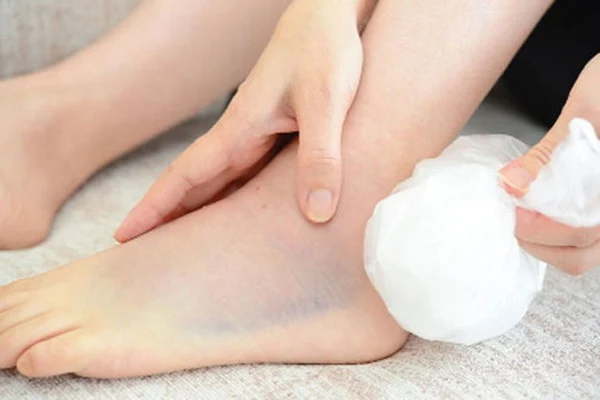
Applying cold compresses during the first 24-48 hours can effectively reduce swelling and pain after an ankle injury.
Common mistakes when treating ankle injuries
Although ankle injuries are quite common, many people still treat them incorrectly from the start, causing the injury to last longer or worsen.
- Massage and manipulate the ankle immediately after a sprain.
This is a very common mistake. Many people have a habit of vigorously massaging or having someone else manipulate their ankle immediately after spraining it. However, when soft tissue is damaged and bleeding internally, massage can increase bleeding, causing more swelling and pain.
- Apply heat immediately after injury.
Some people believe that applying heat helps relieve pain quickly. However, in the early stages after an injury, applying heat can dilate blood vessels, making swelling and bruising worse.
- Continue moving or walking as usual.
Many people mistakenly assume it's just a minor sprain and continue walking or exercising. This can lead to more serious ligament damage and prolong the recovery time.
- Do not seek medical attention when pain persists.
Some ankle injuries may involve ligament tears or minor fractures. If left undetected and untreated, this can lead to ankle instability or chronic pain.
The correct way to treat an ankle injury.
When suffering an ankle injury, patients should follow these principles:
Immediately after an injury, it's important to stop all activity and avoid putting pressure on the injured ankle. Resting helps limit further damage to ligaments and soft tissues.
Applying cold compresses during the first 24-48 hours helps reduce swelling and pain effectively. You can use an ice pack wrapped in a clean towel and apply it to the ankle area for about 15-20 minutes at a time, repeating several times a day.
Using an elastic bandage to gently wrap around the ankle can help reduce swelling and support the joint. However, it should be wrapped moderately, not too tightly, to avoid restricting blood flow.
When resting, you should elevate your legs to help reduce swelling and promote blood circulation.
When should you see a doctor?
Not all ankle sprains require hospitalization, but patients should seek medical attention if they experience the following symptoms:
- Severe pain and inability to stand or walk.
- Rapid swelling or spreading bruising
- Ankle deformity
- Pain that lasts for many days without improvement.
- Suspected fracture
The doctor may order an X-ray or ultrasound to assess the extent of the injury and rule out a fracture.
Ways to prevent ankle injuries
To reduce the risk of ankle injury, people should:
- Warm up thoroughly before playing sports.
- Wear appropriate shoes with good grip.
- Practice with proper technique.
- Avoid overexertion.
- Increase the number of exercises that help strengthen the ankle muscles.
For those who have previously sprained their ankles, rehabilitation exercises and wearing a protective bandage while playing sports can help reduce the risk of recurrence.
In summary: Soft tissue injuries to the ankle, while common, should not be taken lightly. Proper treatment from the outset can help reduce pain quickly, shorten recovery time, and prevent long-term complications.
If there are signs of persistent pain or suspected serious injury, patients should seek medical attention early for timely diagnosis and treatment. Proactively protecting the ankle joint is also a way to maintain mobility and improve quality of life.