



People can get food poisoning from eating the same dish, but some won't. The difference lies in their immune system, the amount they eat, their individual constitution, and how the food is stored and prepared.
The recent series of food poisoning incidents, many involving children, highlights the crucial role of food safety knowledge, especially during hot weather when the risk of food contamination increases.
According to Dr. Nguyen Hoang Thach, Deputy Head of the Pediatrics and Neonatal Intensive Care Department at An Sinh General Hospital (Ho Chi Minh City), the severity of food poisoning varies from person to person and depends on many factors.
First, the amount of food consumed is important; the more you eat, the higher the risk of developing severe symptoms. Underlying health conditions and the timing of meals also affect the severity of the infection.
Eating food early, when it's freshly prepared, means there are fewer bacteria, while eating it later gives bacteria more time to multiply.
How do poisonings caused by bacteria, chemicals, and poor storage differ?
Bacterial poisoning : This is caused by live bacteria entering food, such as Salmonella and E. coli, or toxins from bacteria already present in food, such as Staphylococcus aureus and Bacillus cereus. Initial symptoms often include nausea, vomiting, diarrhea, and abdominal pain. As the infection progresses, bacteria or toxins enter the intestines and bloodstream, potentially causing fever and bloody stools. Severe cases can lead to dehydration, shock, and sepsis.
Chemical poisoning : This occurs from chemicals contaminating food, such as pesticides, heavy metals, detergents, and banned additives (borax, industrial alcohol). Typically, chemical poisoning has a rapid onset and progresses severely, potentially causing severe vomiting, seizures, and altered consciousness, along with specific signs of each type of toxin, such as increased mucus secretion and constricted pupils (organophosphorus poisoning).
The onset of symptoms can be rapid, ranging from minutes to hours, if the chemical is highly toxic. It is usually more severe and potentially fatal if not treated promptly.
Food poisoning due to poor storage : This is not a separate group but rather a risk factor that allows bacteria to thrive and produce toxins in food; therefore, it is essentially a type of bacterial poisoning. For example, rice left overnight, or cooked food left at room temperature for too long, can be contaminated with Bacillus cereus, Salmonella, and Staphylococcus aureus.
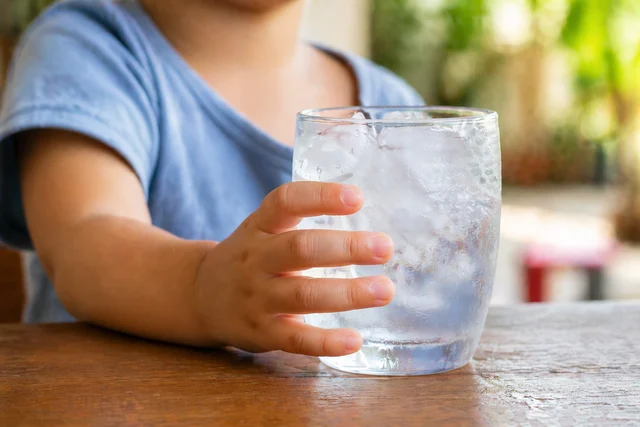
According to doctors, children need to drink enough water every day and should limit their consumption of cold foods or ice water of unknown origin. ILLUSTRATIVE PHOTO: Created by N. Quyen using Gemini
Why do symptoms of food poisoning appear tomorrow even after eating something today?
According to Doctor Hoang Thach, the incubation period varies and depends on the causative agent, specifically:
- 1-6 hours: Toxins present in food (staphylococcus, B. cereus vomit-like form).
- 8 - 16 hours: B. cereus (diarrheal form), Clostridium.
- 12-48 hours: Salmonella, Shigella, or E. coli.
In addition, Dr. Thach stated that it is very common in food poisoning cases where many people eat the same dish but some get food poisoning while others don't, because:
The level of contamination varies : People who eat a lot of contaminated food are generally at higher risk; those who eat little or no contaminated food will not be affected.
Uneven distribution of toxins : Not all meals are equally contaminated. Some portions have higher concentrations of bacteria/toxins.
Individual susceptibility: Generally, young children, the elderly, people with underlying health conditions, and those taking certain medications such as antacids are more susceptible to infection.
Immunity and gut microbiota differ : People who have been previously exposed to the bacteria/toxin and have immunity will generally experience milder poisoning than those who have never been exposed.
"The initial treatment when food poisoning is detected or suspected is also very important, something many people often overlook. Early medical intervention helps reduce the severity of food poisoning, while delaying hospitalization or self-treatment at home easily increases the risk of complications," added Dr. Thach.
According to Dr. Nguyen Cam Tu, a specialist in Gastroenterology at Children's Hospital 2, to protect children's health during the hot season, parents need to pay attention to the following:
- Ensure food safety by cooking food thoroughly, boiling water before drinking, avoiding food left at room temperature for extended periods, and storing food properly in the refrigerator.
- Wash your hands with soap before eating and after using the toilet, and ensure hygiene during food preparation.
- It is important to ensure children drink enough water every day and limit their consumption of cold foods or iced drinks of unknown origin.
- When children exhibit digestive symptoms, prompt action is necessary, including rehydration with oral rehydration solution (ORS) as directed, and maintaining a regular diet, avoiding excessive dietary restrictions.
In particular, children should be taken to a medical facility immediately if they show dangerous signs such as severe diarrhea, persistent vomiting, high fever, blood in the stool, or signs of dehydration in children under 6 months old.